Standing Single-Leg Curl
Standing Single-Leg Curl is a isolation knee flexion exercise for the hamstrings & glutes. Use a controlled range that keeps the target muscles loaded and the joints comfortable.
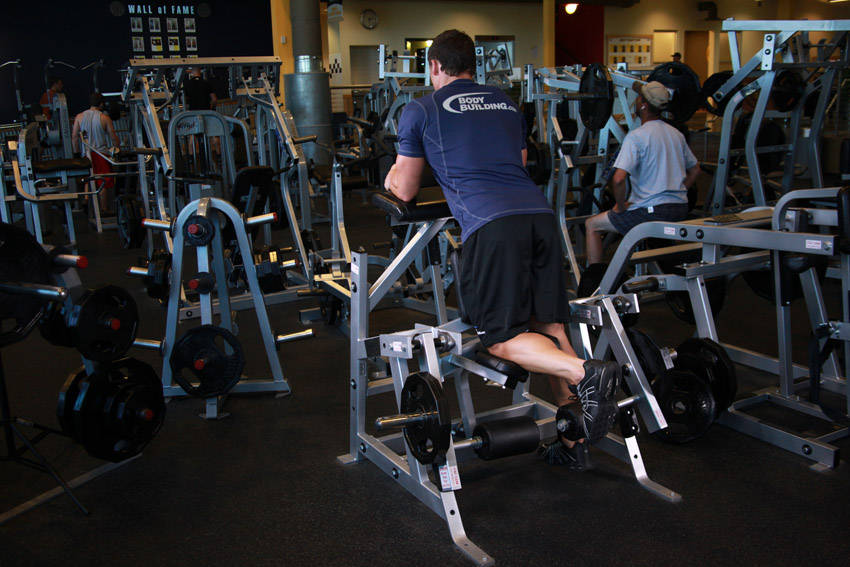
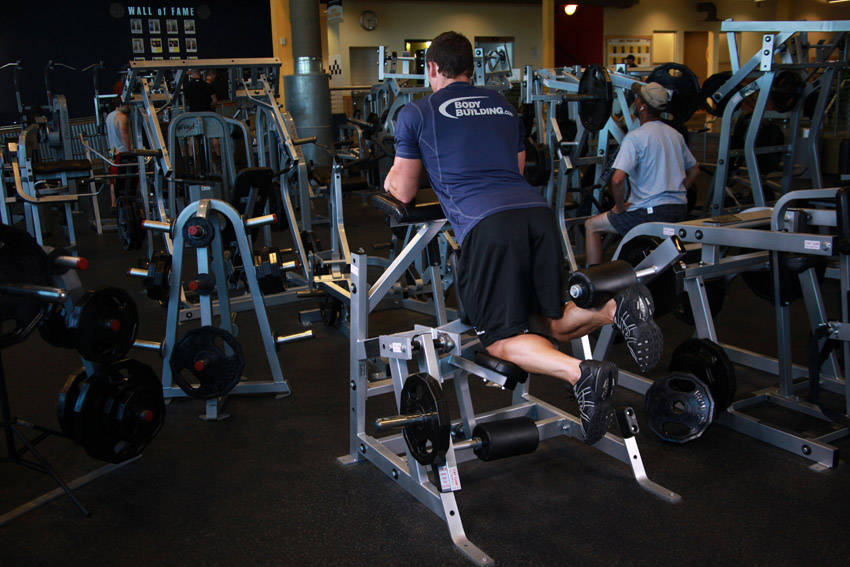
Illustration: Standing Leg Curl · closest available open illustration of the same or equivalent movement. Follow the written setup for this equipment variation.
Set up
- 1Adjust the seat and pads before loading the working weight.
- 2Match the machine pivot to the joint being trained whenever a pivot marker is present.
- 3Align the machine pivot with the knee and place the roller just above the heel.
- 4Secure the thigh or hip pad so the pelvis cannot lift as the knee bends.
How to perform it
- 1Adjust the machine lever to fit your height and lie with your torso bent at the waist facing forward around 30-45 degrees (since an angled position is more favorable for hamstrings recruitment) with the pad of the lever on the back of your right leg (just a few inches under the calves) and the front of the right leg on top of the machine pad.
- 2Keeping the torso bent forward, ensure your leg is fully stretched and grab the side handles of the machine. Position your toes straight. This will be your starting position.
- 3As you exhale, curl your right leg up as far as possible without lifting the upper leg from the pad. Once you hit the fully contracted position, hold it for a second.
- 4As you inhale, bring the legs back to the initial position. Repeat for the recommended amount of repetitions.
- 5Perform the same exercise now for the left leg.
Breathing
Exhale through the effort or shortened position; inhale during the controlled return. Keep the trunk quietly braced.
Technique cues
- •Stay in contact with the pads and keep the machine pivot aligned
- •Keep the pelvis and ribs square; match both sides
- •Pull heel toward glute
- •Keep hips heavy
Common mistakes
- •Hips lifting
- •Bouncing out of the stretch
- •Using a partial range
Machine busy?
See equivalent alternatives
These options train the same main muscle group and prioritize a similar movement pattern. Match the effort and rep target rather than trying to match the exact load.
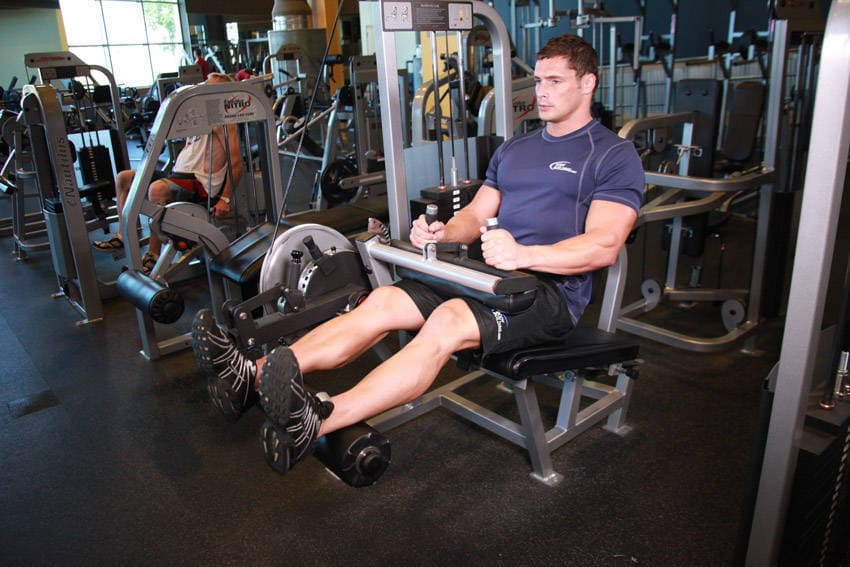
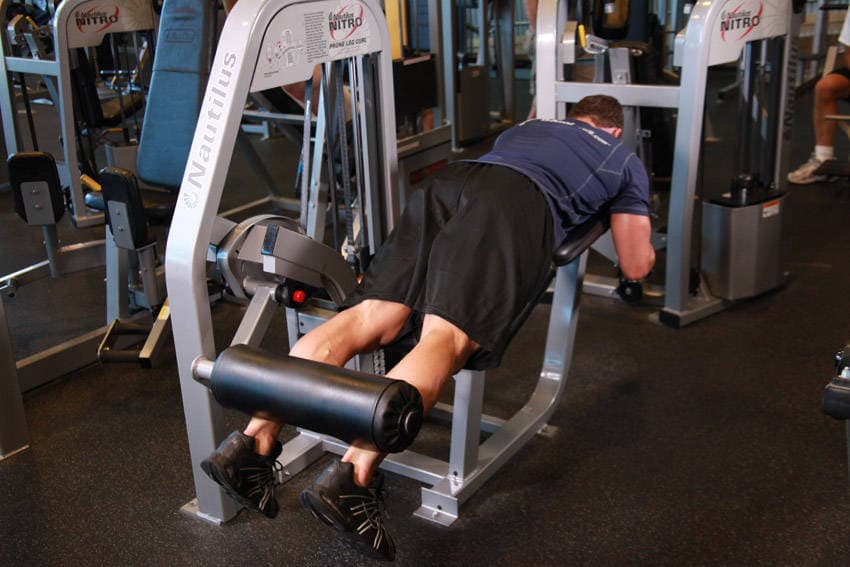
Safety note: This training reference is educational, not medical advice. Use pain-free ranges and seek qualified care for persistent pain, dizziness, or other concerning symptoms.