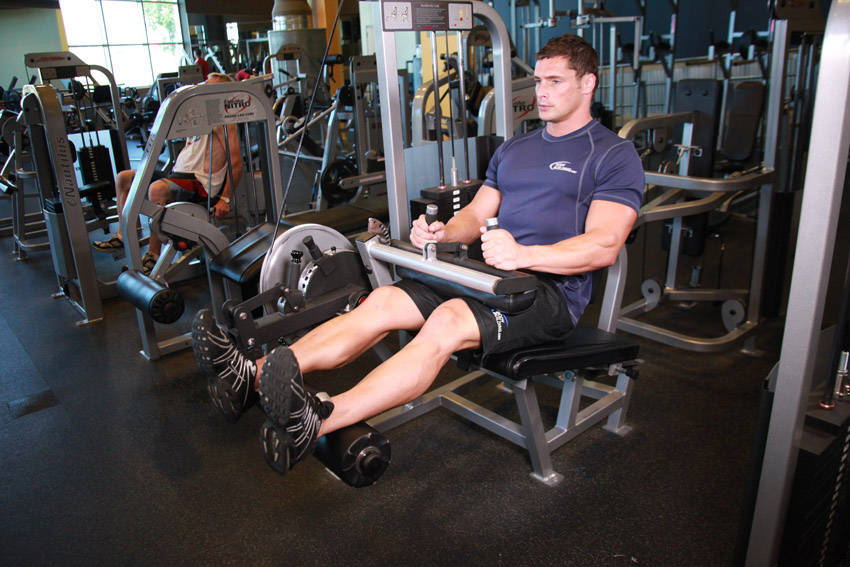
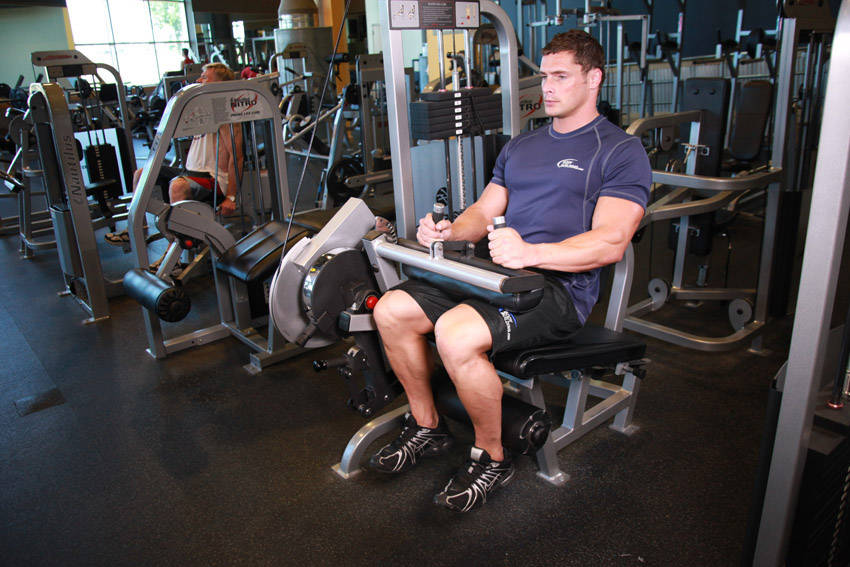
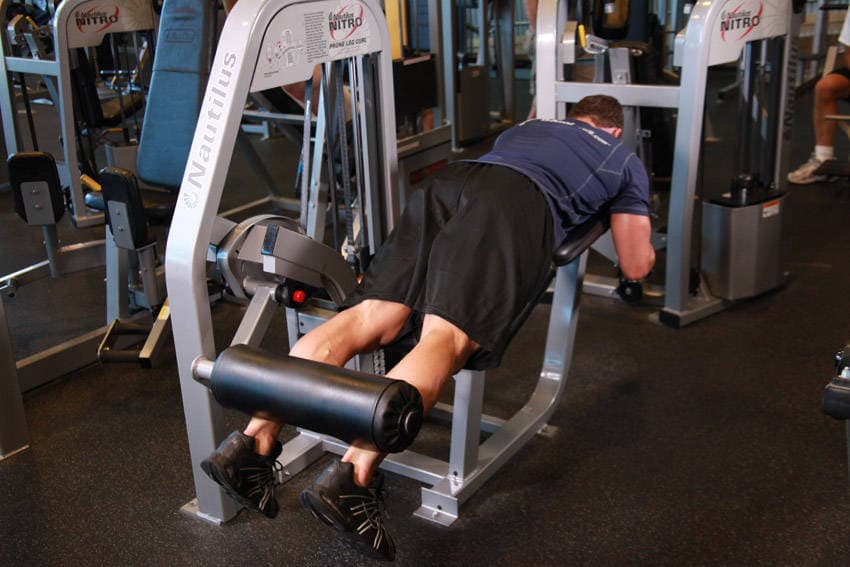
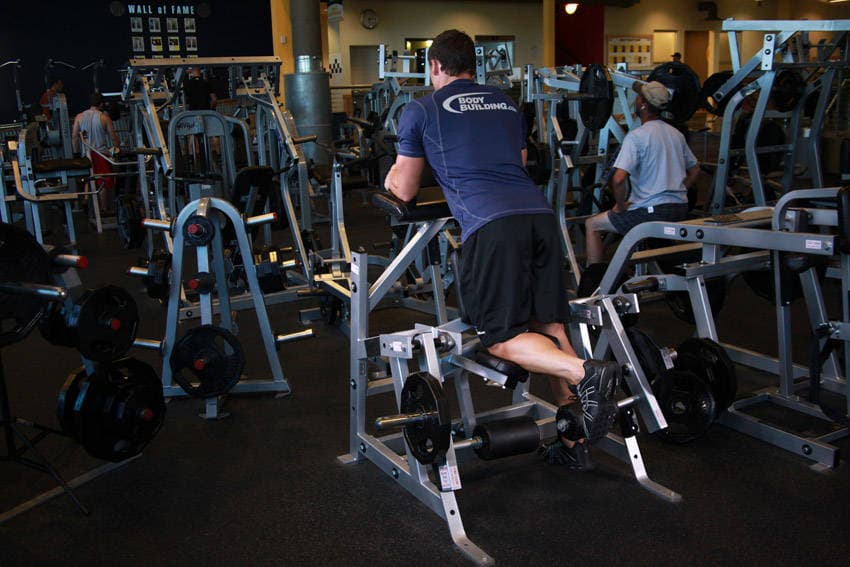
Seated Leg Curl is a isolation knee flexion exercise for the hamstrings & glutes. Use a controlled range that keeps the target muscles loaded and the joints comfortable.
Start
Finish
Illustration: Seated Leg Curl. Follow the written setup for this equipment variation.
Set up
1Adjust the seat and pads before loading the working weight.
2Match the machine pivot to the joint being trained whenever a pivot marker is present.
3Align the machine pivot with the knee and place the roller just above the heel.
4Secure the thigh or hip pad so the pelvis cannot lift as the knee bends.
How to perform it
1Adjust the machine lever to fit your height and sit on the machine with your back against the back support pad.
2Place the back of lower leg on top of padded lever (just a few inches under the calves) and secure the lap pad against your thighs, just above the knees. Then grasp the side handles on the machine as you point your toes straight (or you can also use any of the other two stances) and ensure that the legs are fully straight right in front of you. This will be your starting position.
3As you exhale, pull the machine lever as far as possible to the back of your thighs by flexing at the knees. Keep your torso stationary at all times. Hold the contracted position for a second.
4Slowly return to the starting position as you breathe in.
5Repeat for the recommended amount of repetitions.
Breathing
Exhale through the effort or shortened position; inhale during the controlled return. Keep the trunk quietly braced.
Technique cues
•Stay in contact with the pads and keep the machine pivot aligned
•Pull heel toward glute
•Keep hips heavy
•Own the stretched position
Common mistakes
•Hips lifting
•Bouncing out of the stretch
•Using a partial range
Machine busy?
See equivalent alternatives
These options train the same main muscle group and prioritize a similar movement pattern. Match the effort and rep target rather than trying to match the exact load.
Safety note: This training reference is educational, not medical advice. Use pain-free ranges and seek qualified care for persistent pain, dizziness, or other concerning symptoms.