Smith Standing Calf Raise
Smith Standing Calf Raise is a isolation calf raise exercise for the calves. Use a controlled range that keeps the target muscles loaded and the joints comfortable.
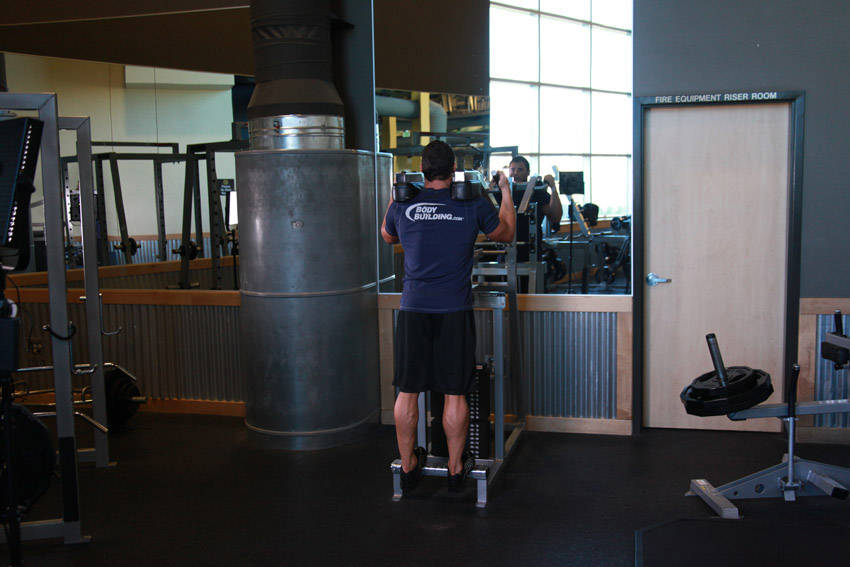
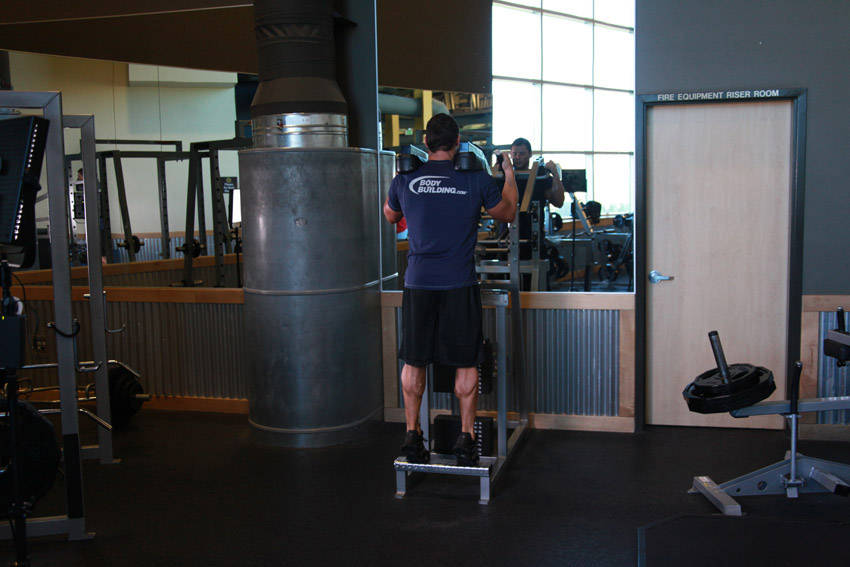
Illustration: Standing Calf Raises · closest available open illustration of the same or equivalent movement. Follow the written setup for this equipment variation.
Set up
- 1Set the safety stops just below the bottom of your range.
- 2Place the body so the fixed bar path matches your natural joint path.
- 3Place the ball of the working foot securely on the platform with the heel free to move.
- 4Straighten or bend the knee as the variation requires and keep pressure through the big-toe side of the foot.
How to perform it
- 1Adjust the padded lever of the calf raise machine to fit your height.
- 2Place your shoulders under the pads provided and position your toes facing forward (or using any of the two other positions described at the beginning of the chapter). The balls of your feet should be secured on top of the calf block with the heels extending off it. Push the lever up by extending your hips and knees until your torso is standing erect. The knees should be kept with a slight bend; never locked. Toes should be facing forward, outwards or inwards as described at the beginning of the chapter. This will be your starting position.
- 3Raise your heels as you breathe out by extending your ankles as high as possible and flexing your calf. Ensure that the knee is kept stationary at all times. There should be no bending at any time. Hold the contracted position by a second before you start to go back down.
- 4Go back slowly to the starting position as you breathe in by lowering your heels as you bend the ankles until calves are stretched.
- 5Repeat for the recommended amount of repetitions.
Breathing
Exhale through the effort or shortened position; inhale during the controlled return. Keep the trunk quietly braced.
Technique cues
- •Let the fixed rail guide the load; adjust your stance instead of fighting its path
- •Full stretch, full rise
- •Keep ankles from rolling out
- •Pause at both ends
Common mistakes
- •Bouncing through the bottom
- •Using a tiny range
- •Shifting pressure to the outside of the foot
Machine busy?
See equivalent alternatives
These options train the same main muscle group and prioritize a similar movement pattern. Match the effort and rep target rather than trying to match the exact load.
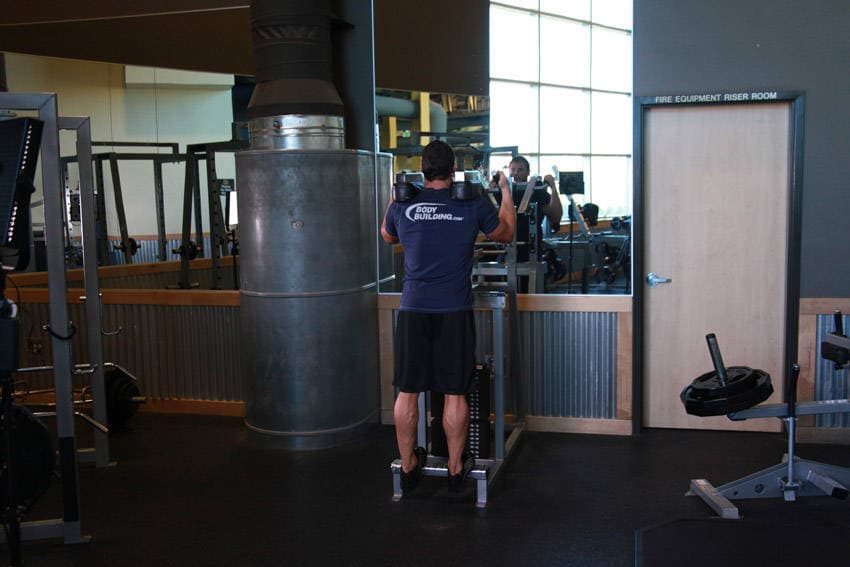
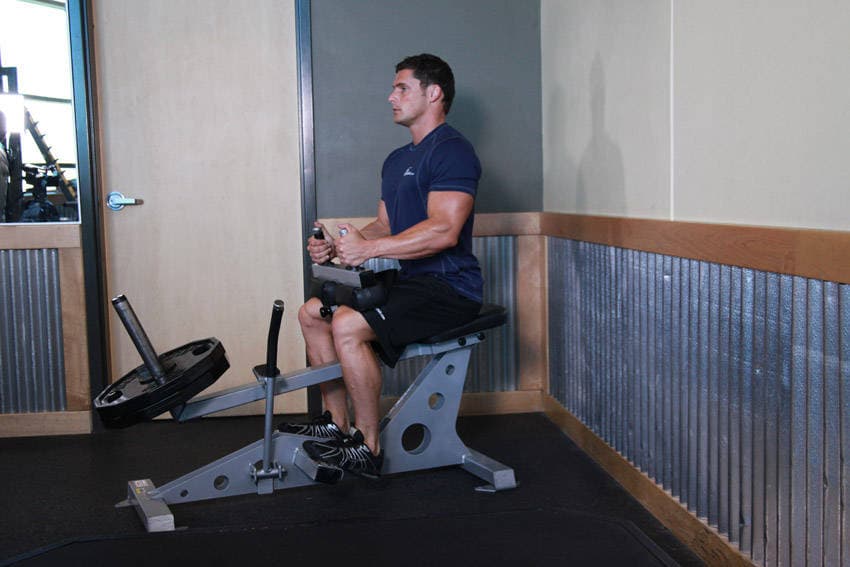
Safety note: This training reference is educational, not medical advice. Use pain-free ranges and seek qualified care for persistent pain, dizziness, or other concerning symptoms.