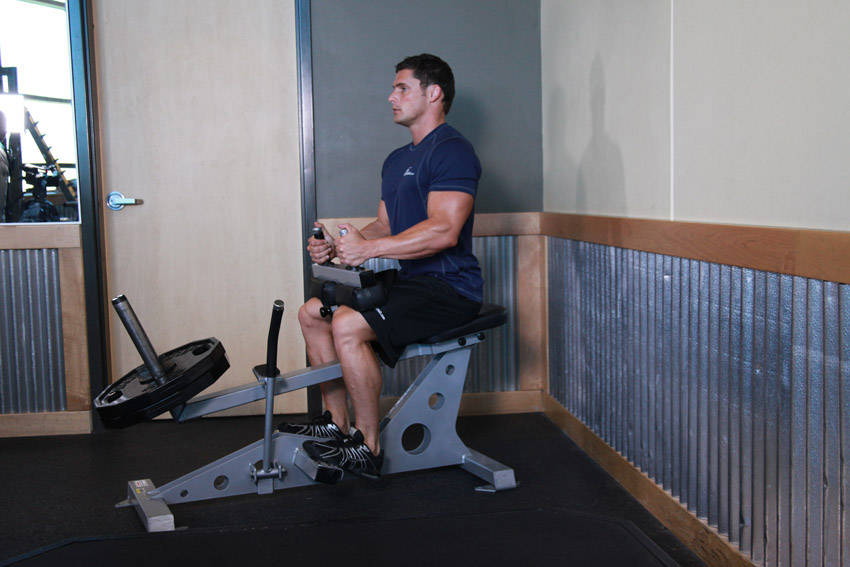
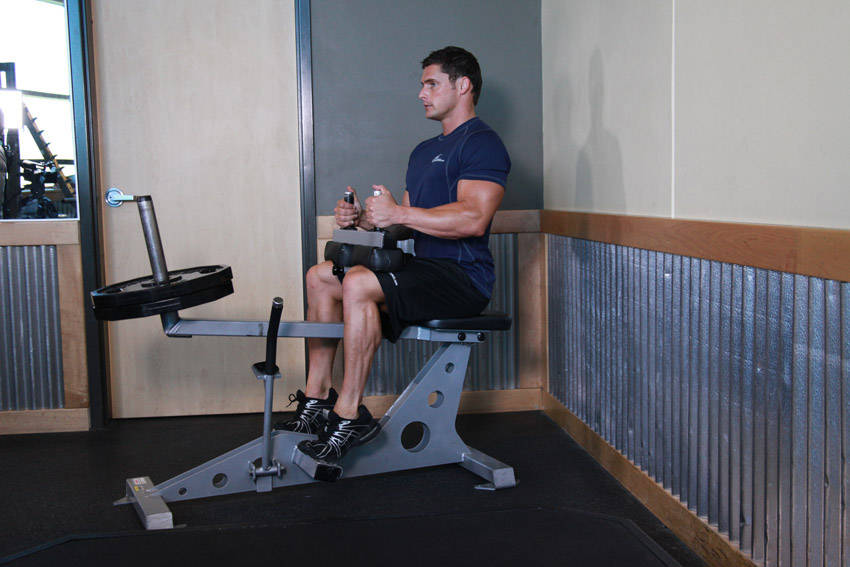
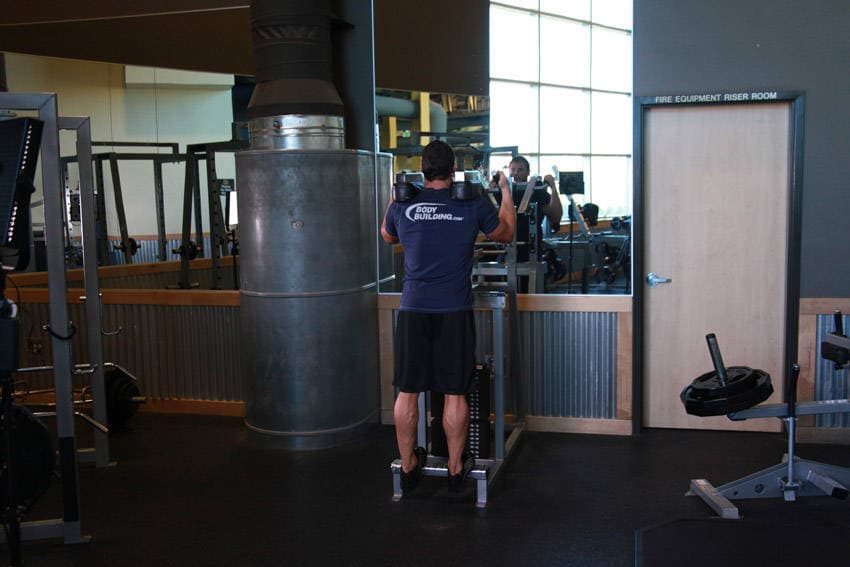
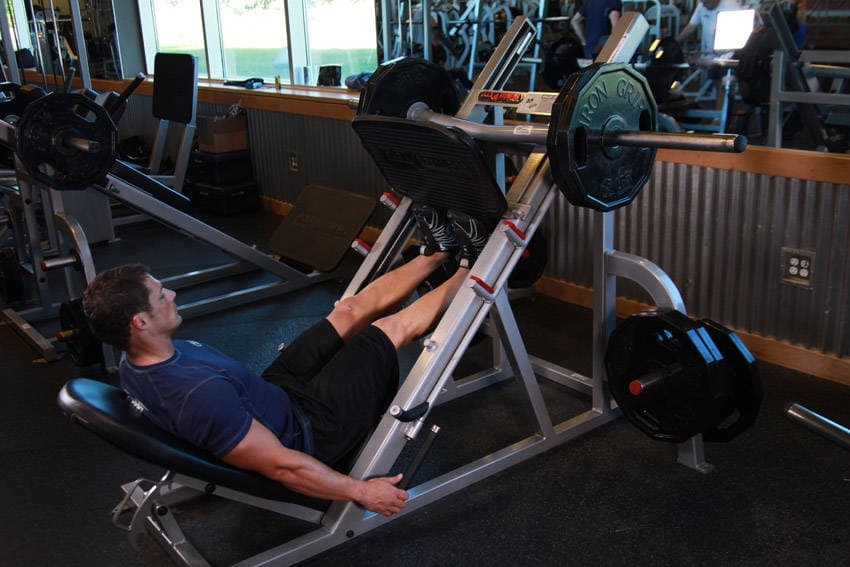
Seated Calf Raise is a isolation calf raise exercise for the calves. Use a controlled range that keeps the target muscles loaded and the joints comfortable.
Start
Finish
Illustration: Seated Calf Raise. Follow the written setup for this equipment variation.
Set up
1Adjust the seat and pads before loading the working weight.
2Match the machine pivot to the joint being trained whenever a pivot marker is present.
3Place the ball of the working foot securely on the platform with the heel free to move.
4Straighten or bend the knee as the variation requires and keep pressure through the big-toe side of the foot.
How to perform it
1Sit on the machine and place your toes on the lower portion of the platform provided with the heels extending off. Choose the toe positioning of your choice (forward, in, or out) as per the beginning of this chapter.
2Place your lower thighs under the lever pad, which will need to be adjusted according to the height of your thighs. Now place your hands on top of the lever pad in order to prevent it from slipping forward.
3Lift the lever slightly by pushing your heels up and release the safety bar. This will be your starting position.
4Slowly lower your heels by bending at the ankles until the calves are fully stretched. Inhale as you perform this movement.
5Raise the heels by extending the ankles as high as possible as you contract the calves and breathe out. Hold the top contraction for a second.
6Repeat for the recommended amount of repetitions.
Breathing
Exhale through the effort or shortened position; inhale during the controlled return. Keep the trunk quietly braced.
Technique cues
•Stay in contact with the pads and keep the machine pivot aligned
•Full stretch, full rise
•Keep ankles from rolling out
•Pause at both ends
Common mistakes
•Bouncing through the bottom
•Using a tiny range
•Shifting pressure to the outside of the foot
Machine busy?
See equivalent alternatives
These options train the same main muscle group and prioritize a similar movement pattern. Match the effort and rep target rather than trying to match the exact load.
Safety note: This training reference is educational, not medical advice. Use pain-free ranges and seek qualified care for persistent pain, dizziness, or other concerning symptoms.