Smith Squat
Smith Squat is a compound squat exercise for the quads. Use a controlled range that keeps the target muscles loaded and the joints comfortable.
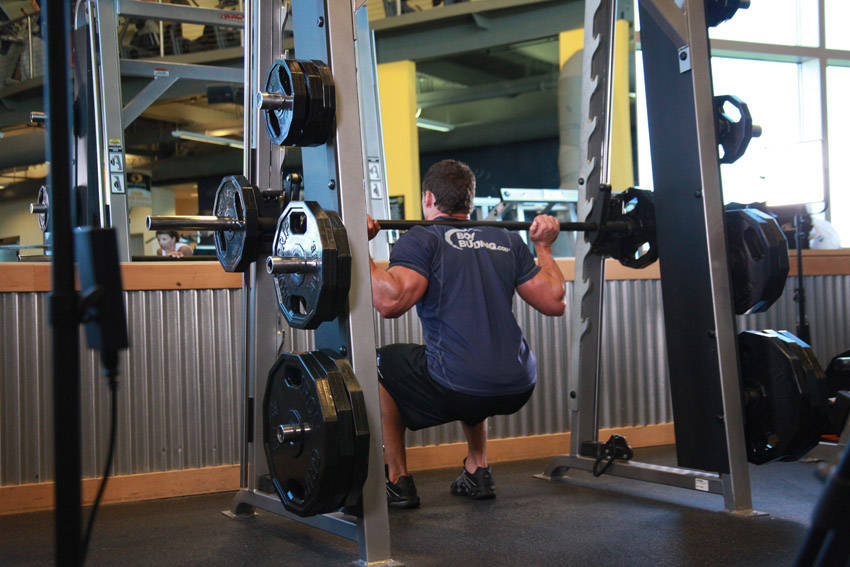
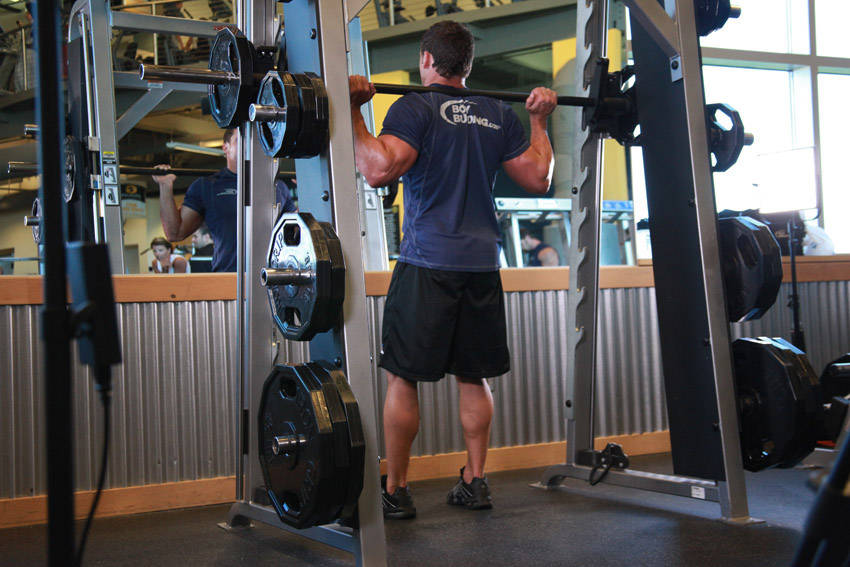
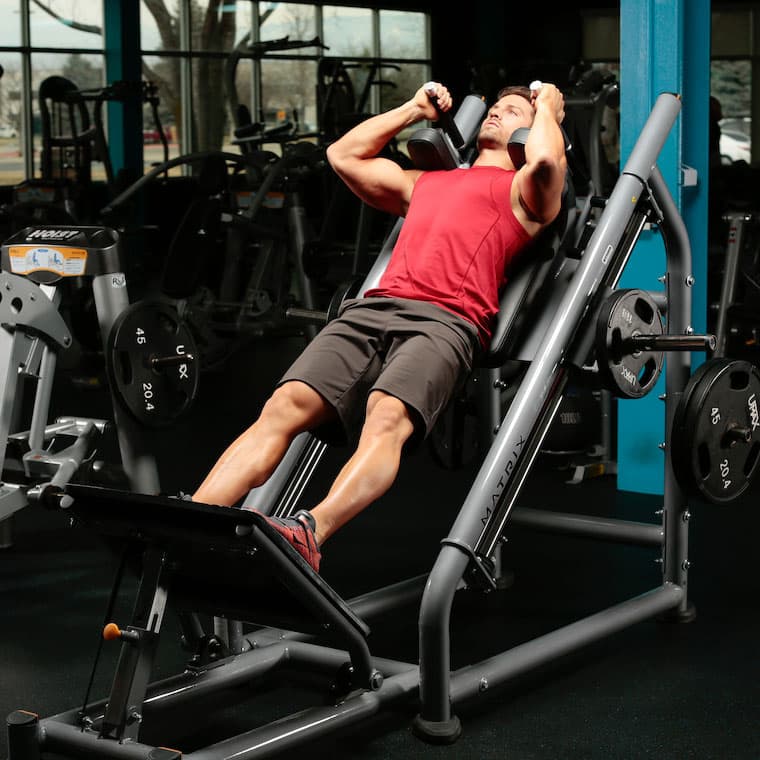
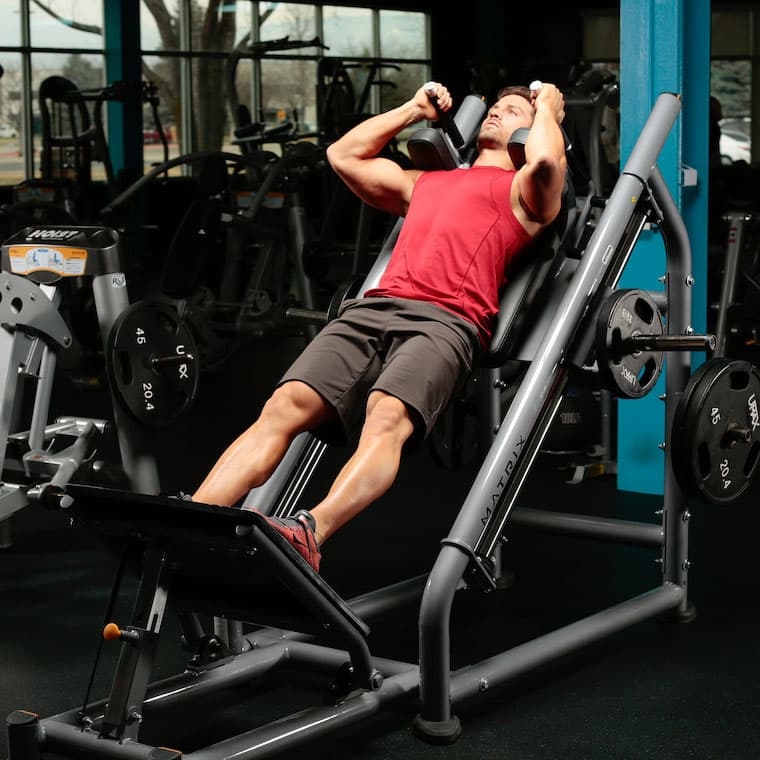
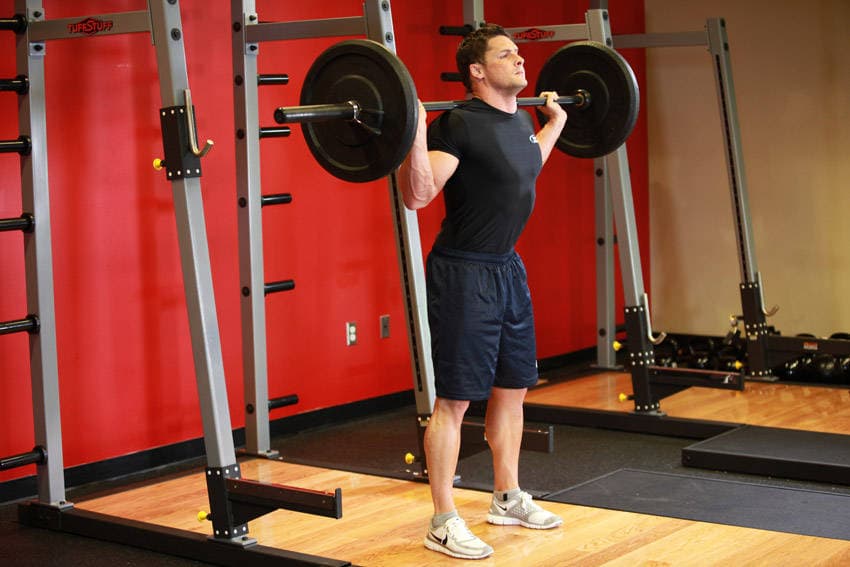
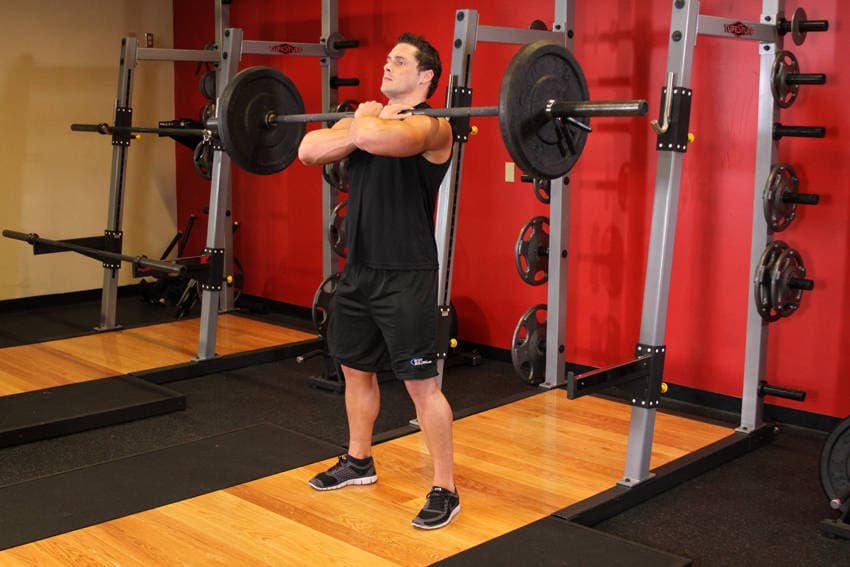
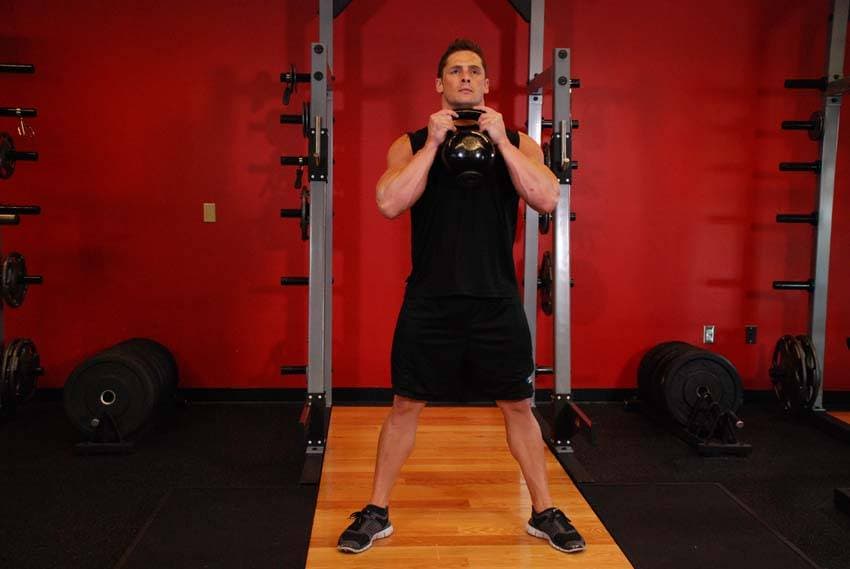
Illustration: Smith Machine Squat · closest available open illustration of the same or equivalent movement. Follow the written setup for this equipment variation.
Set up
- 1Set the safety stops just below the bottom of your range.
- 2Place the body so the fixed bar path matches your natural joint path.
- 3Choose a stance that lets the knees track with the toes and the whole foot stay planted.
- 4Set the bar, safeties, or dumbbell securely and brace before leaving the start position.
How to perform it
- 1To begin, first set the bar on the height that best matches your height. Once the correct height is chosen and the bar is loaded, step under the bar and place the back of your shoulders (slightly below the neck) across it.
- 2Hold on to the bar using both arms at each side (palms facing forward), unlock it and lift it off the rack by first pushing with your legs and at the same time straightening your torso.
- 3Position your legs using a shoulder width medium stance with the toes slightly pointed out. Keep your head up at all times and also maintain a straight back. This will be your starting position. (Note: For the purposes of this discussion we will use the medium stance which targets overall development; however you can choose any of the three stances discussed in the foot stances section).
- 4Begin to slowly lower the bar by bending the knees as you maintain a straight posture with the head up. Continue down until the angle between the upper leg and the calves becomes slightly less than 90-degrees (which is the point in which the upper legs are below parallel to the floor). Inhale as you perform this portion of the movement. Tip: If you performed the exercise correctly, the front of the knees should make an imaginary straight line with the toes that is perpendicular to the front. If your knees are past that imaginary line (if they are past your toes) then you are placing undue stress on the knee and the exercise has been performed incorrectly.
- 5Begin to raise the bar as you exhale by pushing the floor with the heel of your foot as you straighten the legs again and go back to the starting position.
- 6Repeat for the recommended amount of repetitions.
Breathing
Inhale and brace before the lowering phase, then exhale gradually through the hardest part of the repetition without losing trunk position.
Technique cues
- •Let the fixed rail guide the load; adjust your stance instead of fighting its path
- •Knees follow toes
- •Keep the whole foot heavy
- •Control the bottom; drive smoothly
Common mistakes
- •Heels lifting
- •Knees collapsing inward
- •Relaxing into the bottom or bouncing
Machine busy?
See equivalent alternatives
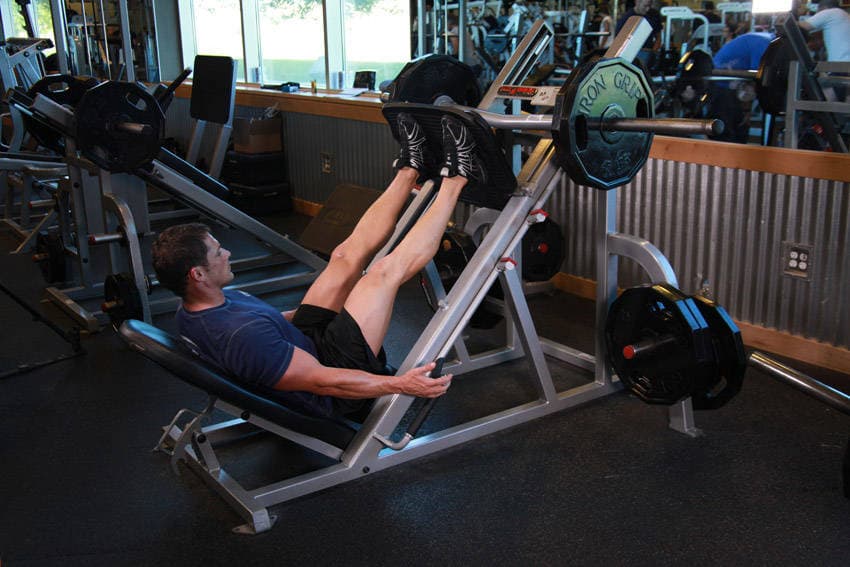
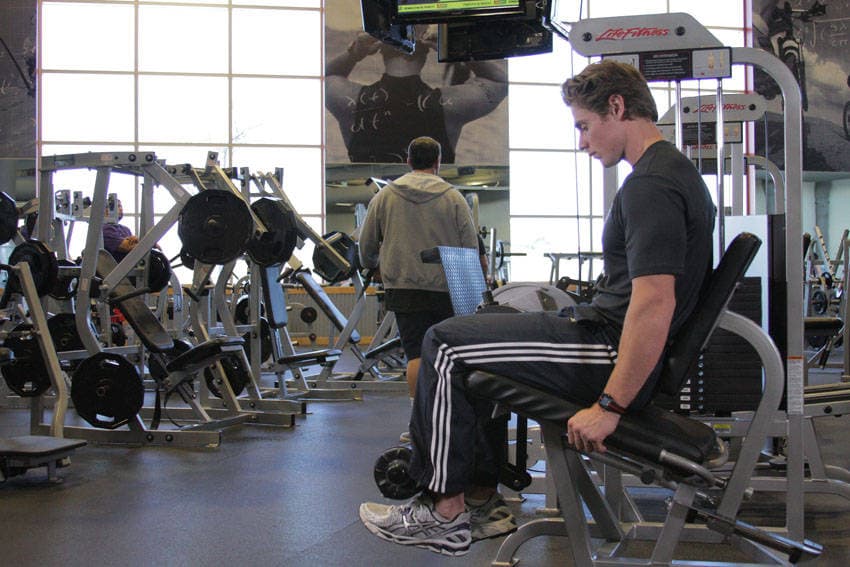
These options train the same main muscle group and prioritize a similar movement pattern. Match the effort and rep target rather than trying to match the exact load.
Safety note: This training reference is educational, not medical advice. Use pain-free ranges and seek qualified care for persistent pain, dizziness, or other concerning symptoms.