Smith Overhead Press
Smith Overhead Press is a compound vertical push exercise for the shoulders. Use a controlled range that keeps the target muscles loaded and the joints comfortable.
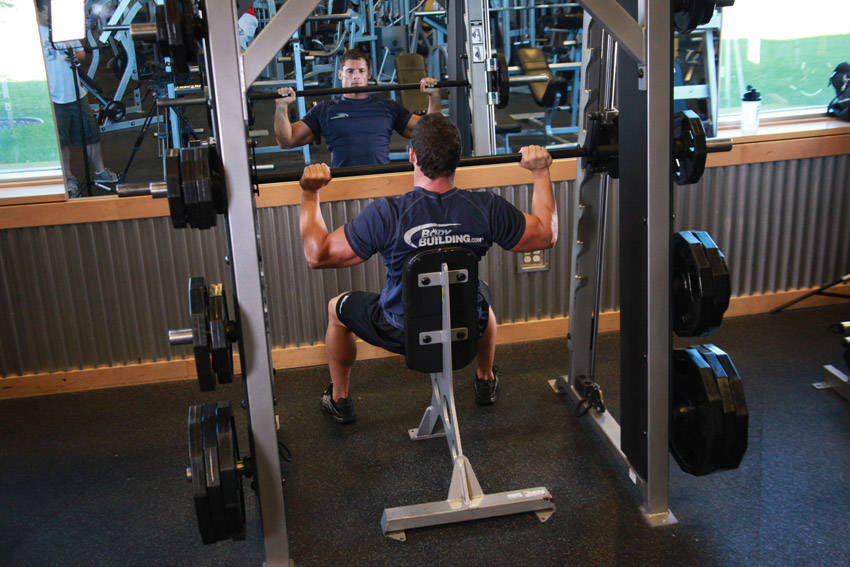
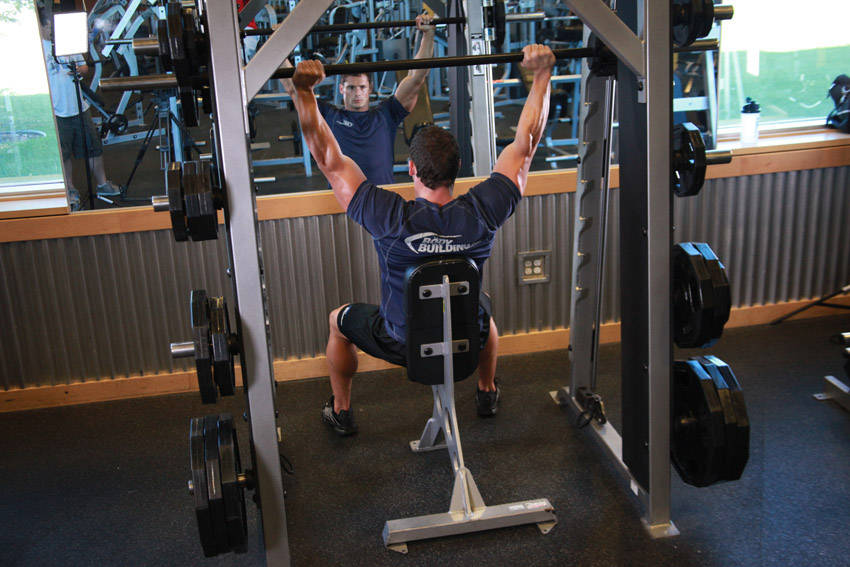
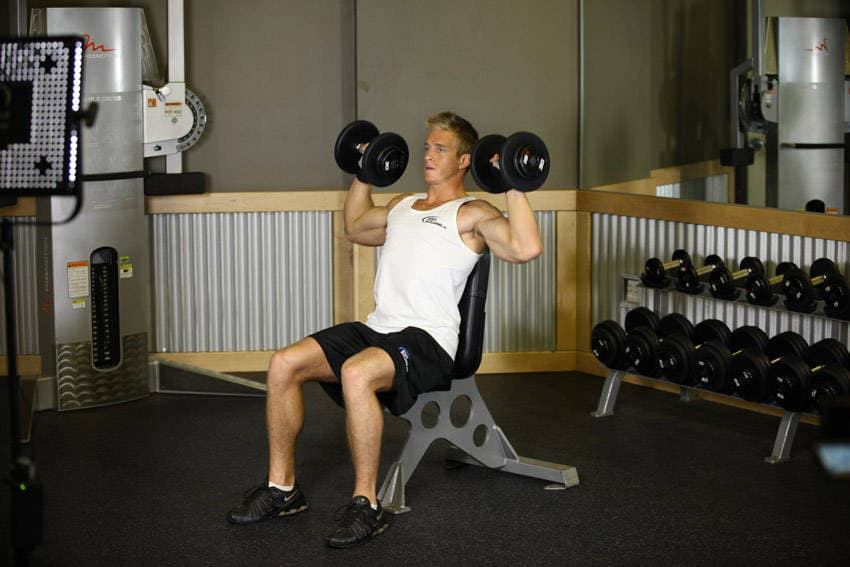
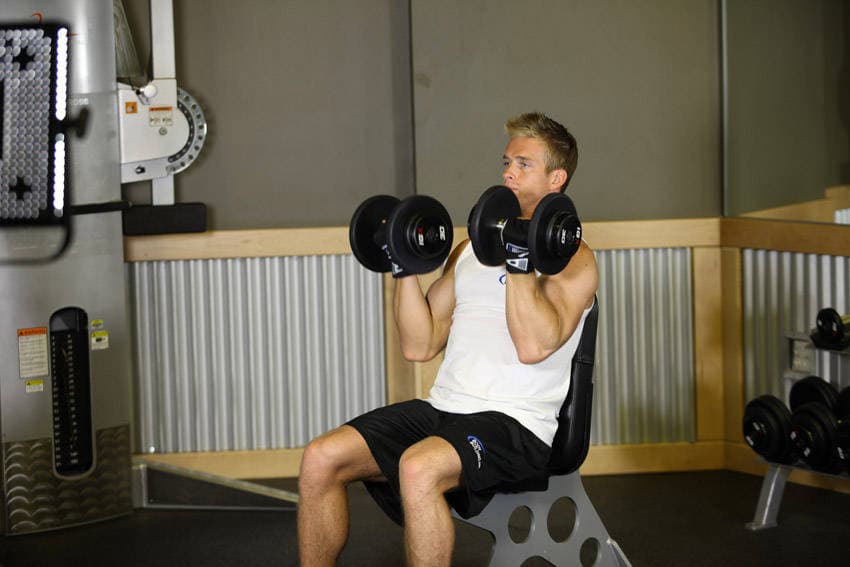
Illustration: Smith Machine Overhead Shoulder Press · closest available open illustration of the same or equivalent movement. Follow the written setup for this equipment variation.
Set up
- 1Set the safety stops just below the bottom of your range.
- 2Place the body so the fixed bar path matches your natural joint path.
- 3Set the seat close to upright and position the handles or weights just outside shoulder width.
- 4Keep the ribs stacked over the pelvis and begin with the forearms close to vertical.
How to perform it
- 1To begin, place a flat bench (or preferably one with back support) underneath a smith machine. Position the barbell at a height so that when seated on the flat bench, the arms must be almost fully extended to reach the barbell.
- 2Once you have the correct height, sit slightly in behind the barbell so that there is an imaginary straight line from the tip of your nose to the barbell. Your feet should be stationary. Grab the barbell with the palms facing forward, unlock it and lift it up so that your arms are fully extended. This is the starting position.
- 3Slowly begin to lower the barbell until it is level with your chin while inhaling.
- 4Then lift the barbell back to the starting position using your shoulders while exhaling.
- 5Repeat for the recommended amount of repetitions.
Breathing
Inhale and brace before the lowering phase, then exhale gradually through the hardest part of the repetition without losing trunk position.
Technique cues
- •Let the fixed rail guide the load; adjust your stance instead of fighting its path
- •Stack wrists over elbows
- •Keep ribs down
- •Reach up without shrugging aggressively
Common mistakes
- •Turning the press into an incline press
- •Flaring the elbows excessively
- •Crashing into the bottom position
Machine busy?
See equivalent alternatives
These options train the same main muscle group and prioritize a similar movement pattern. Match the effort and rep target rather than trying to match the exact load.
Machine
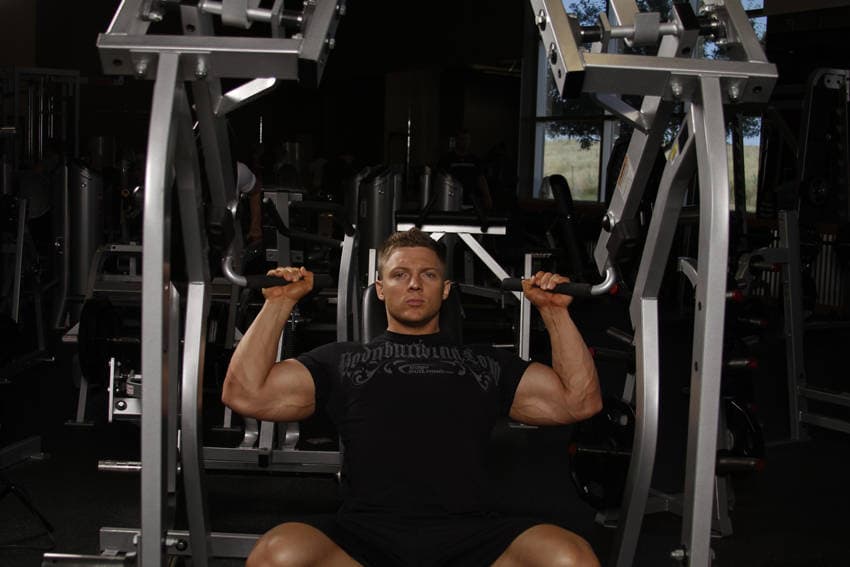
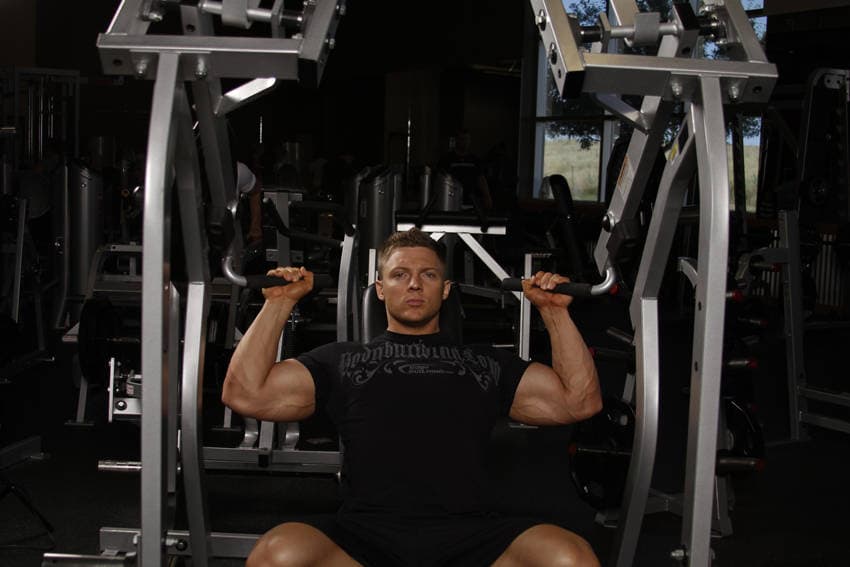
Plate-loaded
Safety note: This training reference is educational, not medical advice. Use pain-free ranges and seek qualified care for persistent pain, dizziness, or other concerning symptoms.