Single-Leg Extension
Single-Leg Extension is a isolation knee extension exercise for the quads. Use a controlled range that keeps the target muscles loaded and the joints comfortable.
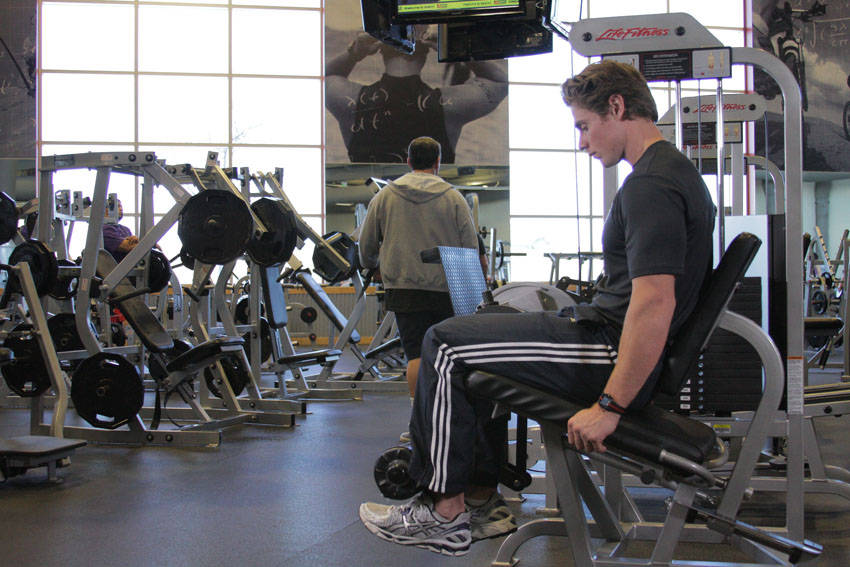
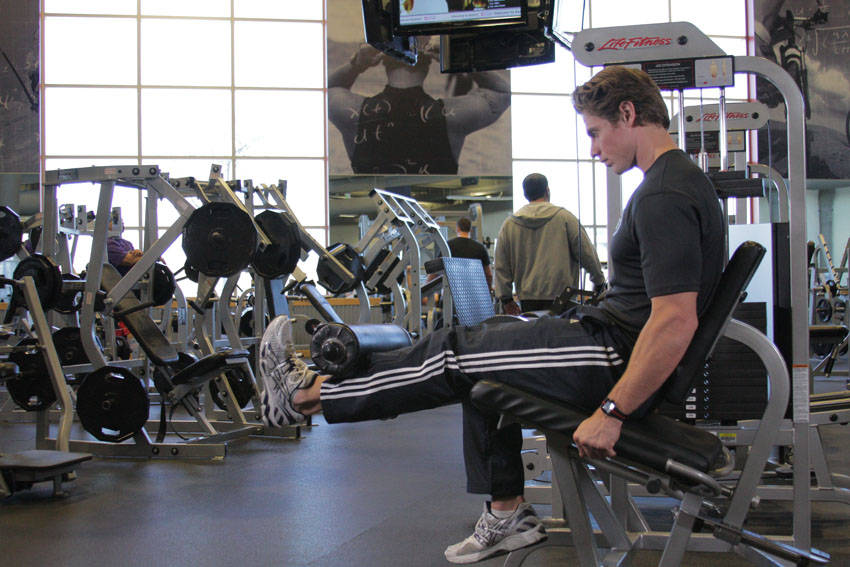
Illustration: Single-Leg Leg Extension · closest available open illustration of the same or equivalent movement. Follow the written setup for this equipment variation.
Set up
- 1Adjust the seat and pads before loading the working weight.
- 2Match the machine pivot to the joint being trained whenever a pivot marker is present.
- 3Align the machine pivot with the knee and place the shin pad just above the ankle.
- 4Set the back pad so the hips stay down while the knee can bend comfortably.
How to perform it
- 1Seat yourself in the machine and adjust it so that you are positioned properly. The pad should be against the lower part of the shin but not in contact with the ankle. Adjust the seat so that the pivot point is in line with your knee. Select a weight appropriate for your abilities.
- 2Maintaining good posture, fully extend one leg, pausing at the top of the motion.
- 3Return to the starting position without letting the weight stop, keeping tension on the muscle.
- 4Repeat for the desired number of repetitions.
Breathing
Exhale through the effort or shortened position; inhale during the controlled return. Keep the trunk quietly braced.
Technique cues
- •Stay in contact with the pads and keep the machine pivot aligned
- •Keep the pelvis and ribs square; match both sides
- •Lift with the quads
- •Smooth squeeze at the top
Common mistakes
- •Misaligning the knee and machine pivot
- •Kicking the weight up
- •Hips lifting from the seat
Machine busy?
See equivalent alternatives
These options train the same main muscle group and prioritize a similar movement pattern. Match the effort and rep target rather than trying to match the exact load.
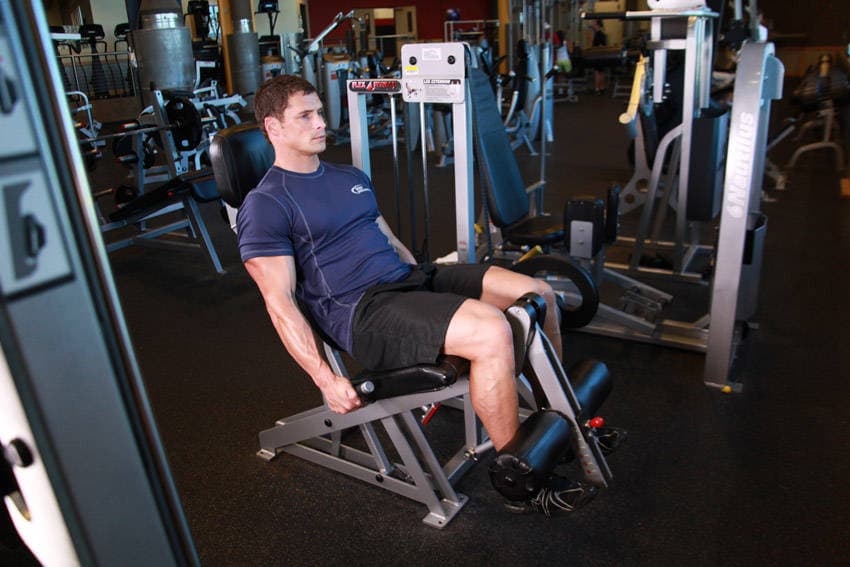
Machine
Safety note: This training reference is educational, not medical advice. Use pain-free ranges and seek qualified care for persistent pain, dizziness, or other concerning symptoms.