Rope Pressdown
Rope Pressdown is a isolation elbow extension exercise for the triceps. Use a controlled range that keeps the target muscles loaded and the joints comfortable.
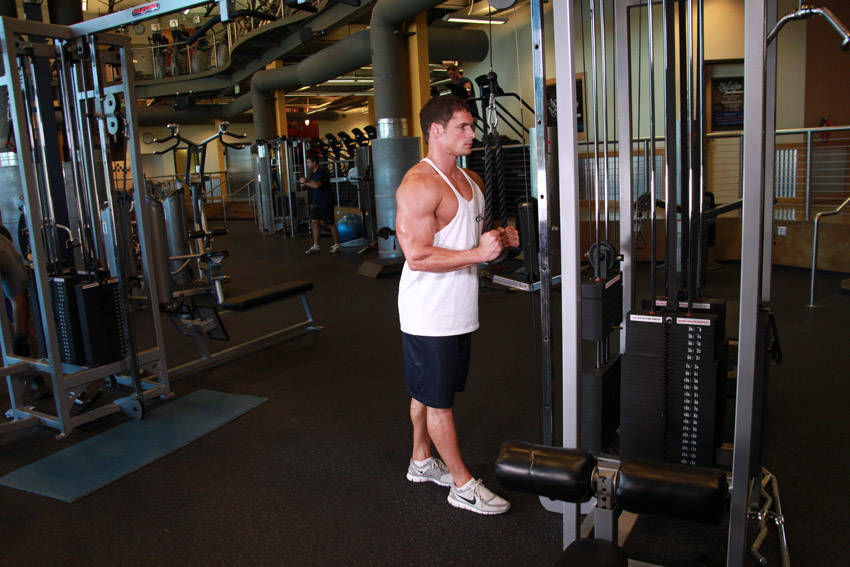
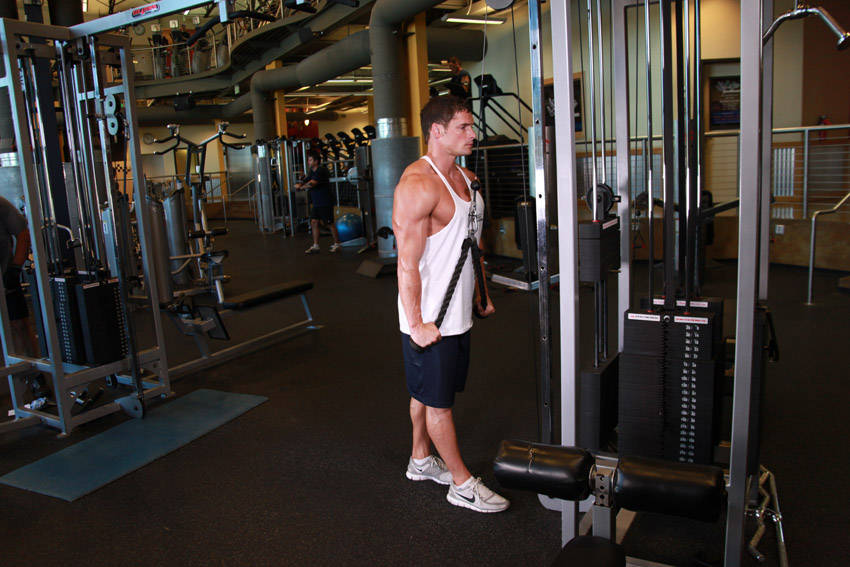
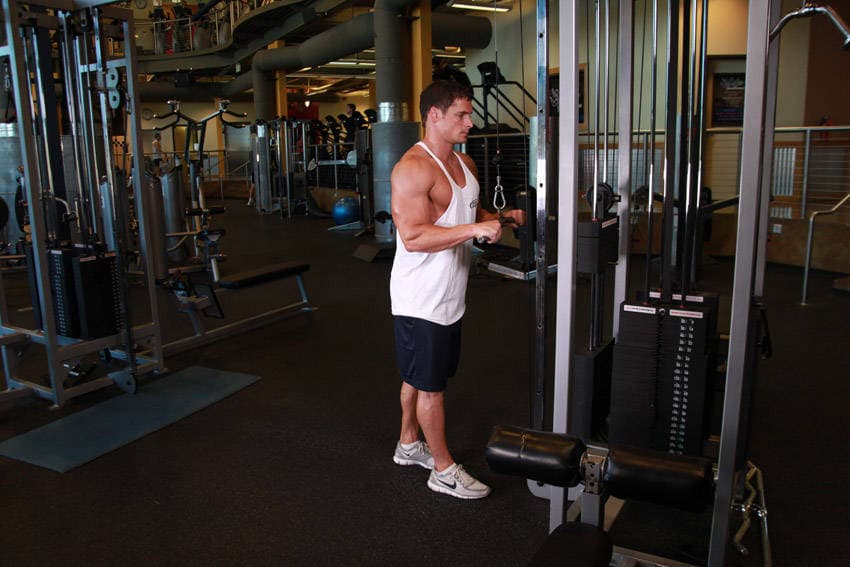
Illustration: Triceps Pushdown - Rope Attachment · closest available open illustration of the same or equivalent movement. Follow the written setup for this equipment variation.
Set up
- 1Set the pulley height before selecting the load.
- 2Stand or sit far enough away to keep cable tension at both ends of the repetition.
- 3Set the pulley high and stand far enough away that the cable clears the body.
- 4Pin the upper arms beside the torso and begin with the elbows fully bent.
How to perform it
- 1Attach a rope attachment to a high pulley and grab with a neutral grip (palms facing each other).
- 2Standing upright with the torso straight and a very small inclination forward, bring the upper arms close to your body and perpendicular to the floor. The forearms should be pointing up towards the pulley as they hold the rope with the palms facing each other. This is your starting position.
- 3Using the triceps, bring the rope down as you bring each side of the rope to the side of your thighs. At the end of the movement the arms are fully extended and perpendicular to the floor. The upper arms should always remain stationary next to your torso and only the forearms should move. Exhale as you perform this movement.
- 4After holding for a second, at the contracted position, bring the rope slowly up to the starting point. Breathe in as you perform this step.
- 5Repeat for the recommended amount of repetitions.
Breathing
Exhale through the effort or shortened position; inhale during the controlled return. Keep the trunk quietly braced.
Technique cues
- •Keep the cable aligned with the moving limb from start to finish
- •Only the forearms move
- •Finish long through the elbows
- •Keep wrists neutral
Common mistakes
- •Using shoulder movement
- •Flaring elbows without control
- •Letting the weight pull the body out of position
Machine busy?
See equivalent alternatives
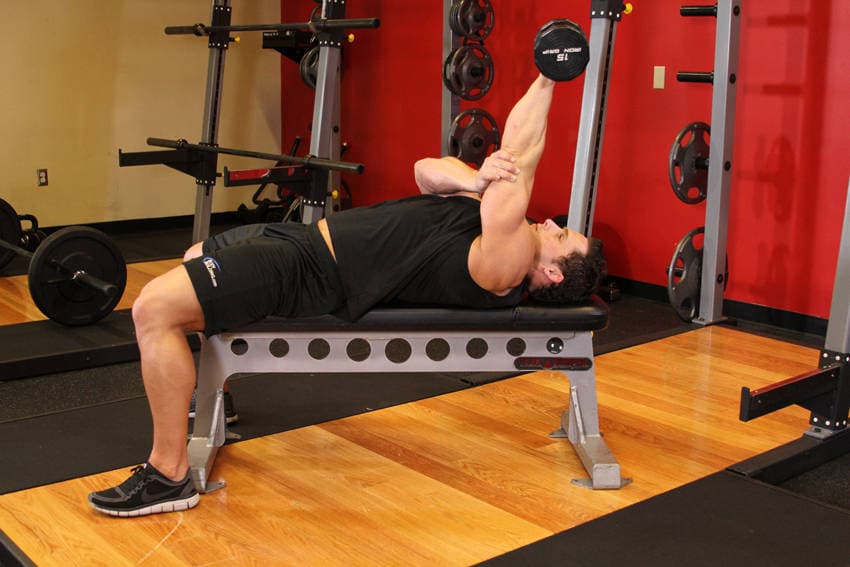
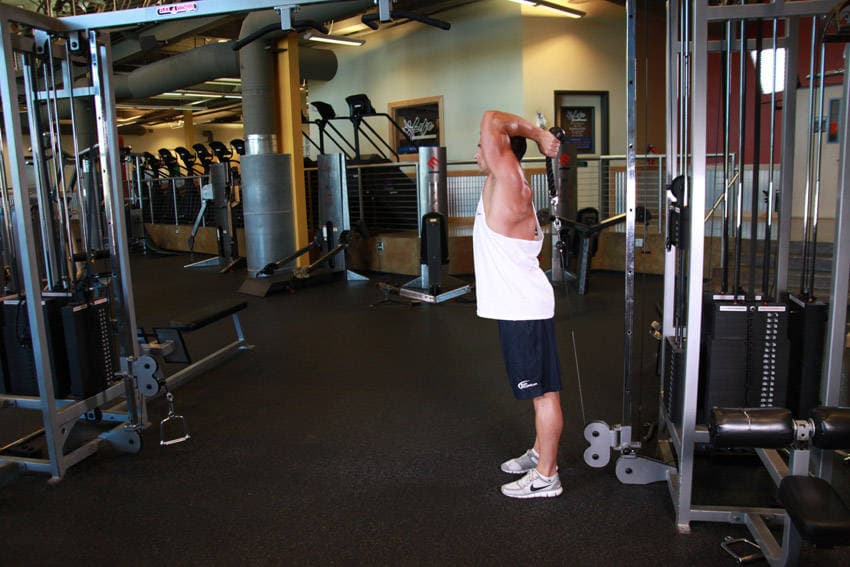
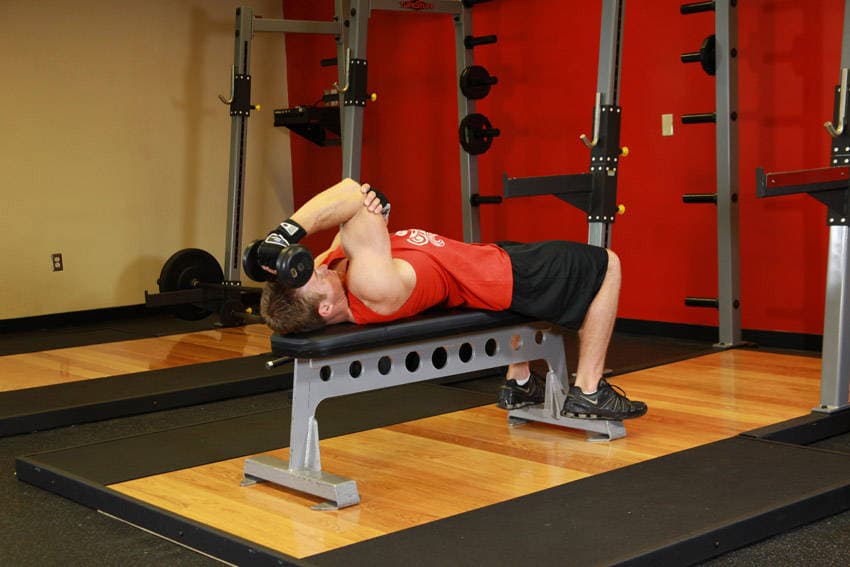
These options train the same main muscle group and prioritize a similar movement pattern. Match the effort and rep target rather than trying to match the exact load.
Safety note: This training reference is educational, not medical advice. Use pain-free ranges and seek qualified care for persistent pain, dizziness, or other concerning symptoms.