Wrist Curl
Wrist Curl is a isolation elbow flexion exercise for the biceps & forearms. Use a controlled range that keeps the target muscles loaded and the joints comfortable.
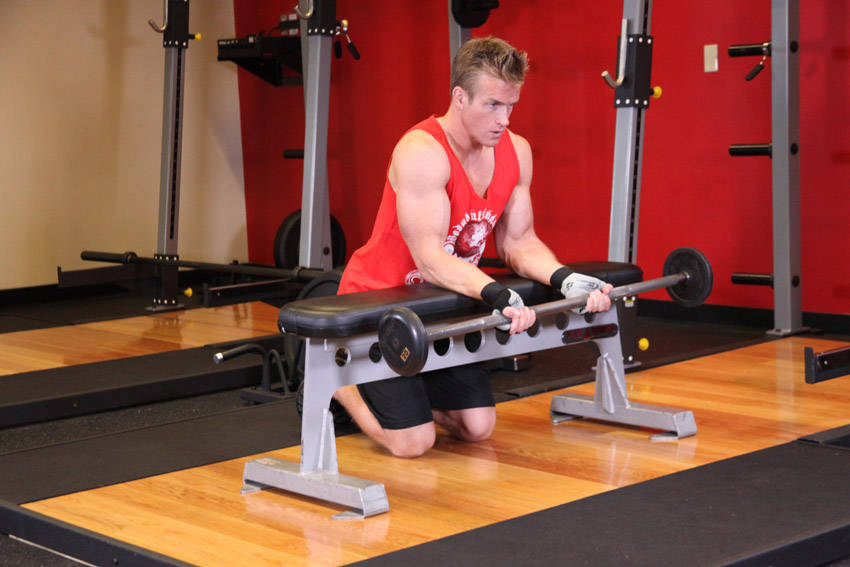
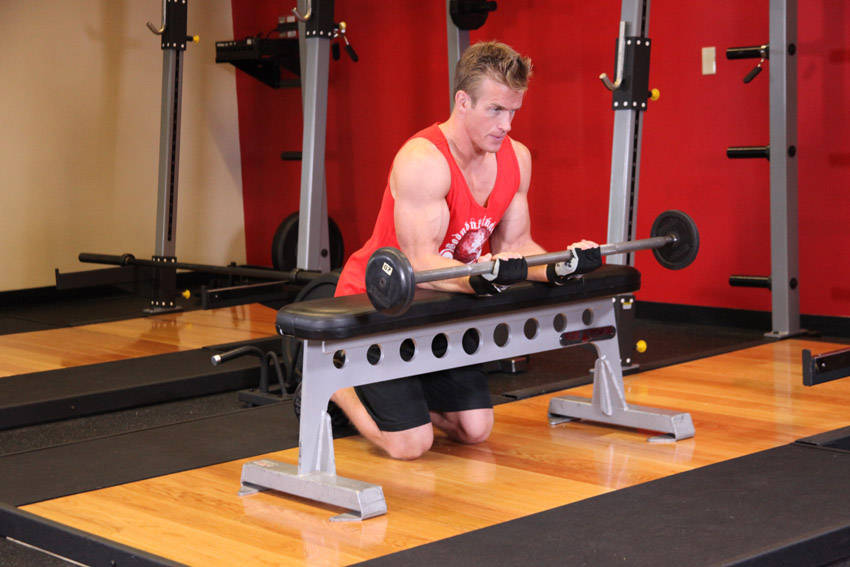
Illustration: Palms-Up Barbell Wrist Curl Over A Bench · closest available open illustration of the same or equivalent movement. Follow the written setup for this equipment variation.
Set up
- 1Set safeties just below the lowest controlled position.
- 2Center the plates and use collars where appropriate.
- 3Position the upper arms so the elbows can remain still and the biceps begin lengthened.
- 4Choose a handle and wrist angle that allow a full curl without bending the wrist.
How to perform it
- 1Start out by placing a barbell on one side of a flat bench.
- 2Kneel down on both of your knees so that your body is facing the flat bench.
- 3Use your arms to grab the barbell with a supinated grip (palms up) and bring them up so that your forearms are resting against the flat bench. Your wrists should be hanging over the edge.
- 4Start out by curling your wrist upwards and exhaling.
- 5Slowly lower your wrists back down to the starting position while inhaling.
- 6Your forearms should be stationary as your wrist is the only movement needed to perform this exercise.
- 7Repeat for the recommended amount of repetitions.
Breathing
Exhale through the effort or shortened position; inhale during the controlled return. Keep the trunk quietly braced.
Technique cues
- •Upper arms stay quiet
- •Lead with the little-finger side for supinated curls
- •Lower slowly
Common mistakes
- •Swinging the hips
- •Letting elbows drift excessively
- •Bending the wrists to finish the rep
Machine busy?
See equivalent alternatives
These options train the same main muscle group and prioritize a similar movement pattern. Match the effort and rep target rather than trying to match the exact load.
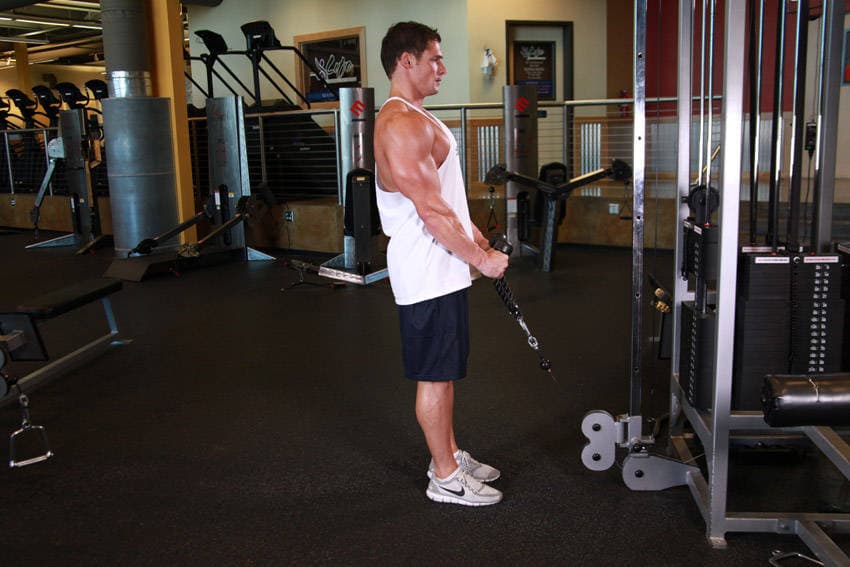
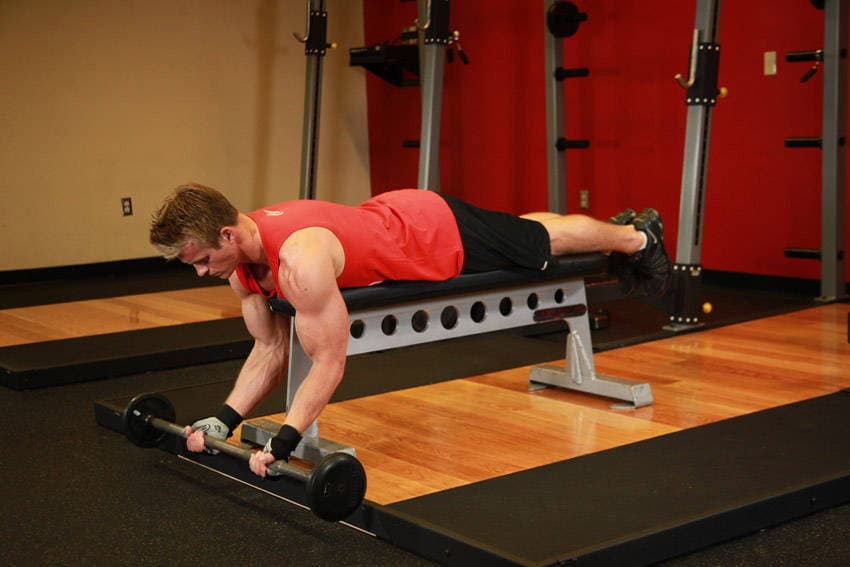
Safety note: This training reference is educational, not medical advice. Use pain-free ranges and seek qualified care for persistent pain, dizziness, or other concerning symptoms.