Walking Lunge
Walking Lunge is a compound lunge exercise for the quads. Use a controlled range that keeps the target muscles loaded and the joints comfortable.
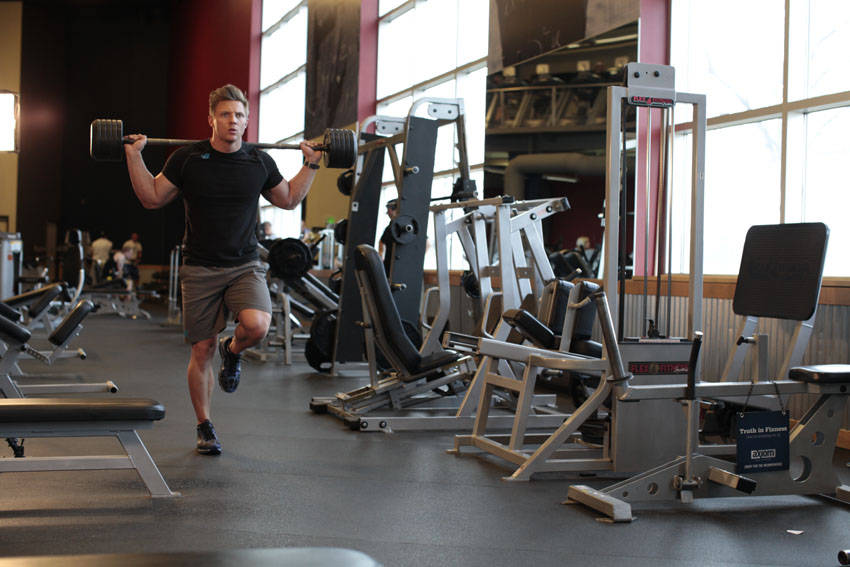
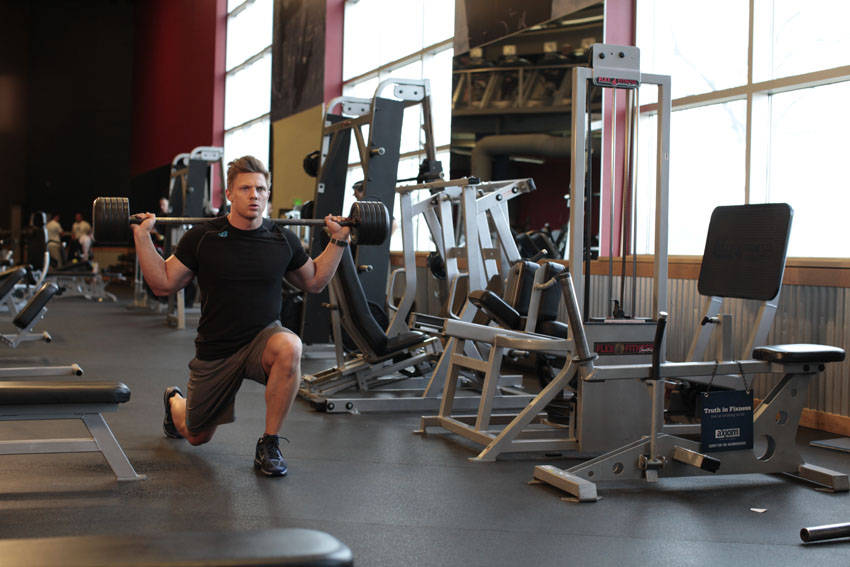
Illustration: Barbell Walking Lunge · closest available open illustration of the same or equivalent movement. Follow the written setup for this equipment variation.
Set up
- 1Clear a safe path for picking up and setting down the dumbbells.
- 2Use a controlled kick-up or a spotter for heavy pressing variations.
- 3Choose a step length and platform height that keep the working foot flat and the pelvis level.
- 4Use light support if balance would otherwise limit the target leg.
How to perform it
- 1Begin standing with your feet shoulder width apart and a barbell across your upper back.
- 2Step forward with one leg, flexing the knees to drop your hips. Descend until your rear knee nearly touches the ground. Your posture should remain upright, and your front knee should stay above the front foot.
- 3Drive through the heel of your lead foot and extend both knees to raise yourself back up.
- 4Step forward with your rear foot, repeating the lunge on the opposite leg.
Breathing
Inhale and brace before the lowering phase, then exhale gradually through the hardest part of the repetition without losing trunk position.
Technique cues
- •Front foot stays rooted
- •Drop down, not just backward
- •Keep hips square
Common mistakes
- •Pushing mostly from the rear leg
- •Losing balance to chase load
- •Letting the front knee cave inward
Machine busy?
See equivalent alternatives
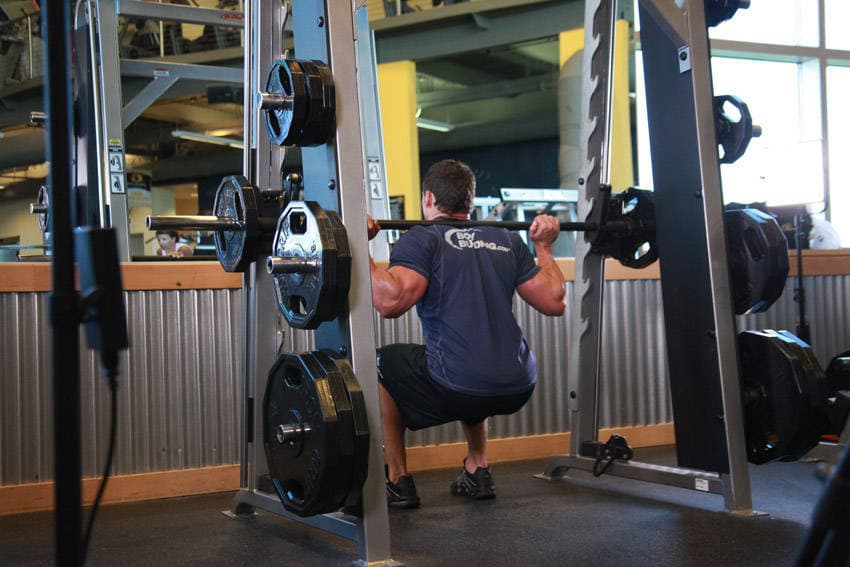
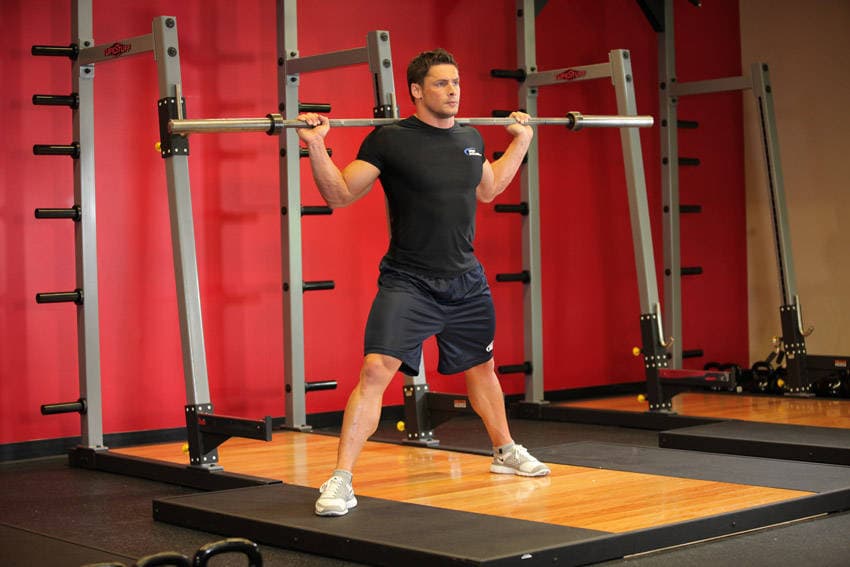
These options train the same main muscle group and prioritize a similar movement pattern. Match the effort and rep target rather than trying to match the exact load.
Smith machine
Dumbbell
Safety note: This training reference is educational, not medical advice. Use pain-free ranges and seek qualified care for persistent pain, dizziness, or other concerning symptoms.