Dumbbell Lateral Raise
Dumbbell Lateral Raise is a isolation vertical push exercise for the shoulders. Use a controlled range that keeps the target muscles loaded and the joints comfortable.

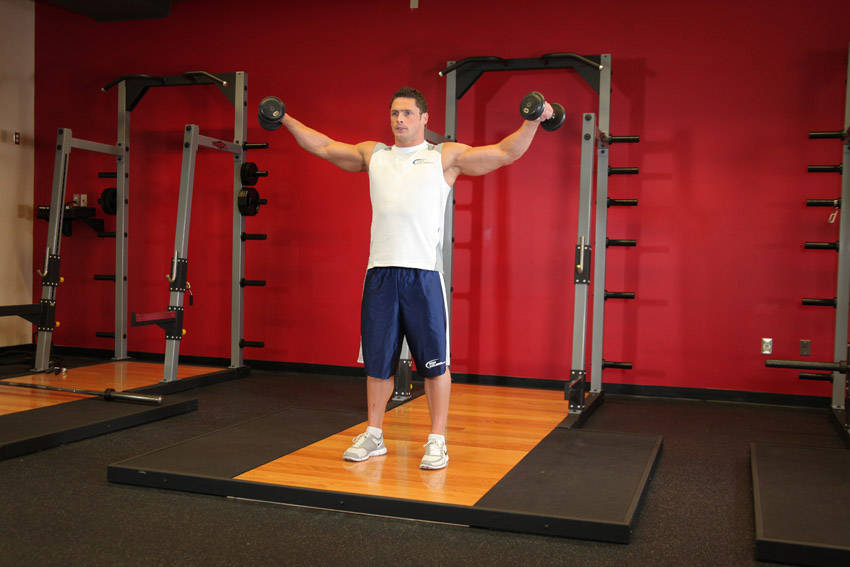
Illustration: Side Lateral Raise · closest available open illustration of the same or equivalent movement. Follow the written setup for this equipment variation.
Set up
- 1Clear a safe path for picking up and setting down the dumbbells.
- 2Use a controlled kick-up or a spotter for heavy pressing variations.
- 3Position the machine pivot, cable, or dumbbells so resistance begins without a shrug.
- 4Lead with the elbows in the shoulder-blade plane and stop around shoulder height.
How to perform it
- 1Pick a couple of dumbbells and stand with a straight torso and the dumbbells by your side at arms length with the palms of the hand facing you. This will be your starting position.
- 2While maintaining the torso in a stationary position (no swinging), lift the dumbbells to your side with a slight bend on the elbow and the hands slightly tilted forward as if pouring water in a glass. Continue to go up until you arms are parallel to the floor. Exhale as you execute this movement and pause for a second at the top.
- 3Lower the dumbbells back down slowly to the starting position as you inhale.
- 4Repeat for the recommended amount of repetitions.
Breathing
Exhale through the effort or shortened position; inhale during the controlled return. Keep the trunk quietly braced.
Technique cues
- •Stack wrists over elbows
- •Keep ribs down
- •Reach up without shrugging aggressively
Common mistakes
- •Turning the press into an incline press
- •Flaring the elbows excessively
- •Crashing into the bottom position
Machine busy?
See equivalent alternatives
These options train the same main muscle group and prioritize a similar movement pattern. Match the effort and rep target rather than trying to match the exact load.
Machine

Cable

Safety note: This training reference is educational, not medical advice. Use pain-free ranges and seek qualified care for persistent pain, dizziness, or other concerning symptoms.