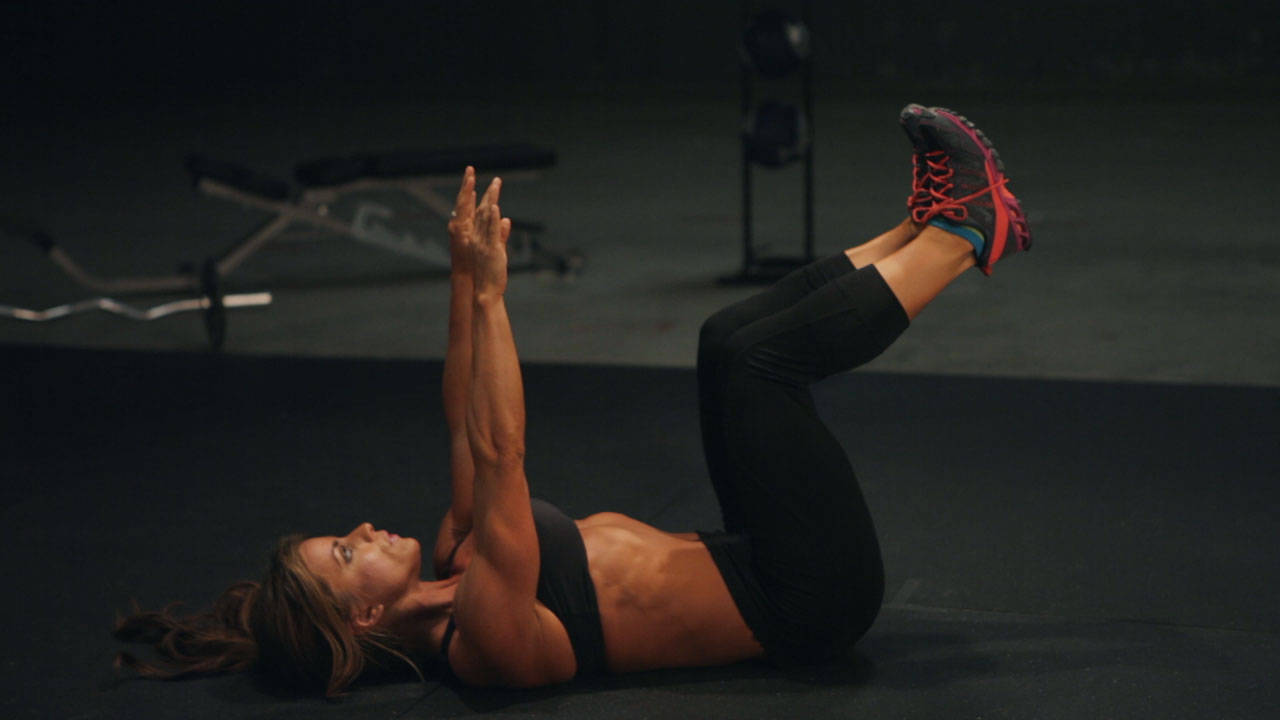
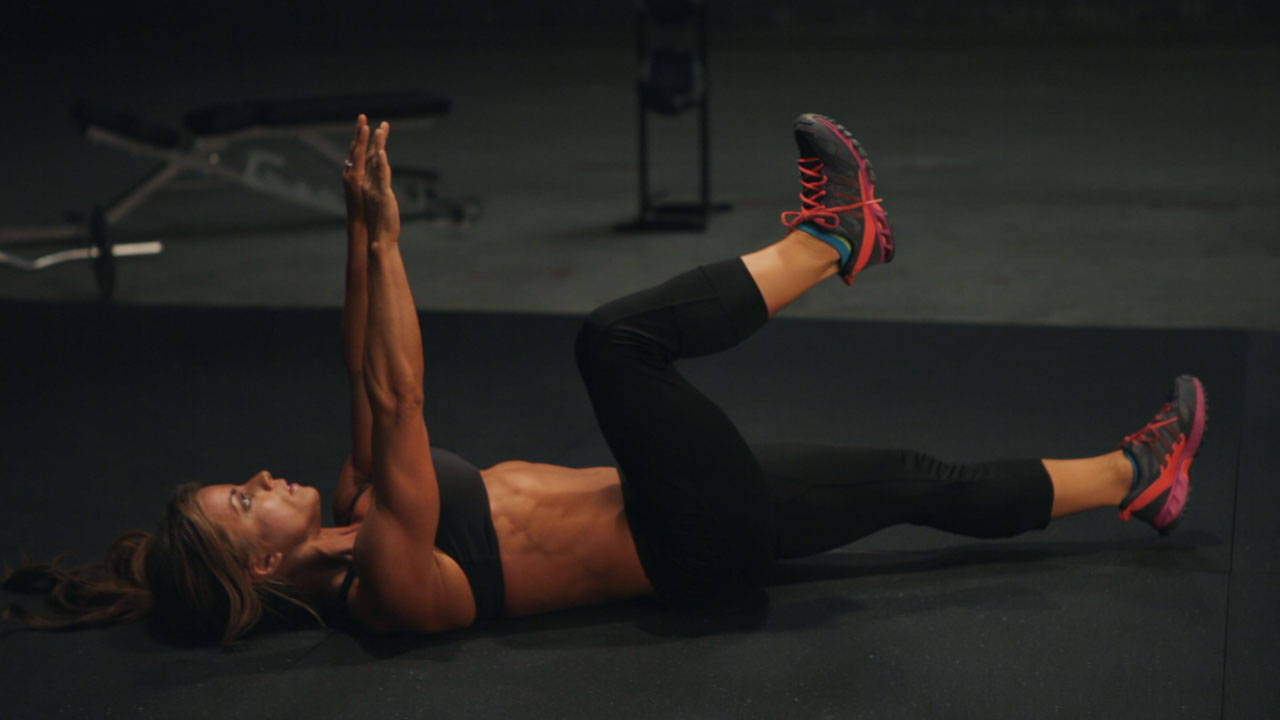
Dead Bug is a isolation anti-extension exercise for the core. Use a controlled range that keeps the target muscles loaded and the joints comfortable.
Start
Finish
Illustration: Dead Bug. Follow the written setup for this equipment variation.
Set up
1Choose a stable support surface and clear the space around you.
2Use assistance or elevation to match the prescribed rep range.
3Set the resistance and body position so the ribs begin stacked over the pelvis.
4Brace before moving and choose a range that does not create pulling in the low back or neck.
How to perform it
1Begin lying on your back with your hands extended above you toward the ceiling.
2Bring your feet, knees, and hips up to 90 degrees.
3Exhale hard to bring your ribcage down and flatten your back onto the floor, rotating your pelvis up and squeezing your glutes. Hold this position throughout the movement. This will be your starting position.
4Initiate the exercise by extending one leg, straightening the knee and hip to bring the leg just above the ground.
5Maintain the position of your lumbar and pelvis as you perform the movement, as your back is going to want to arch.
6Stay tight and return the working leg to the starting position.
7Repeat on the opposite side, alternating until the set is complete.
Breathing
Exhale through the effort or shortened position; inhale during the controlled return. Keep the trunk quietly braced.
Technique cues
•Ribs down
•Keep belt buckle tipped up
•Move only as far as you can brace
Common mistakes
•Sagging through the lower back
•Holding the breath too long
•Chasing range at the expense of position
Machine busy?
See equivalent alternatives
These options train the same main muscle group and prioritize a similar movement pattern. Match the effort and rep target rather than trying to match the exact load.
Safety note: This training reference is educational, not medical advice. Use pain-free ranges and seek qualified care for persistent pain, dizziness, or other concerning symptoms.