Chest-Biased Dip
Chest-Biased Dip is a compound horizontal push exercise for the chest. Use a controlled range that keeps the target muscles loaded and the joints comfortable.
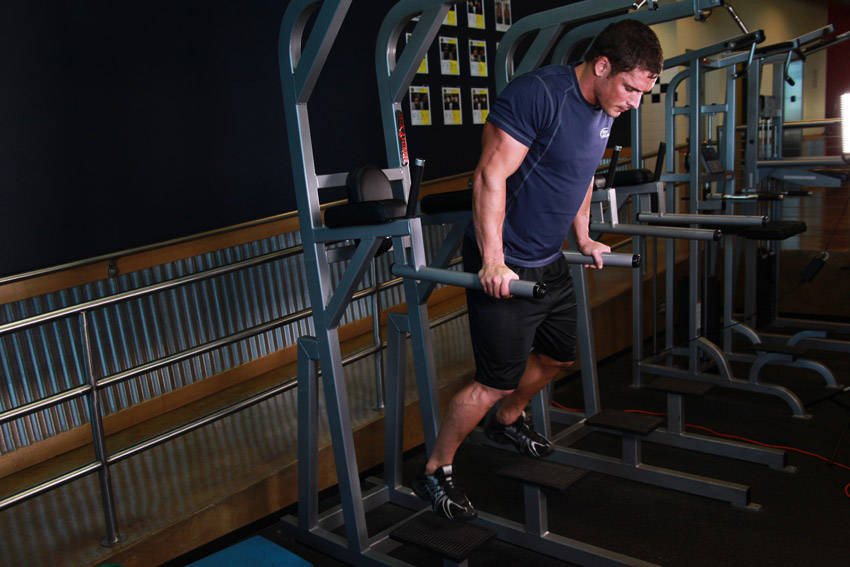
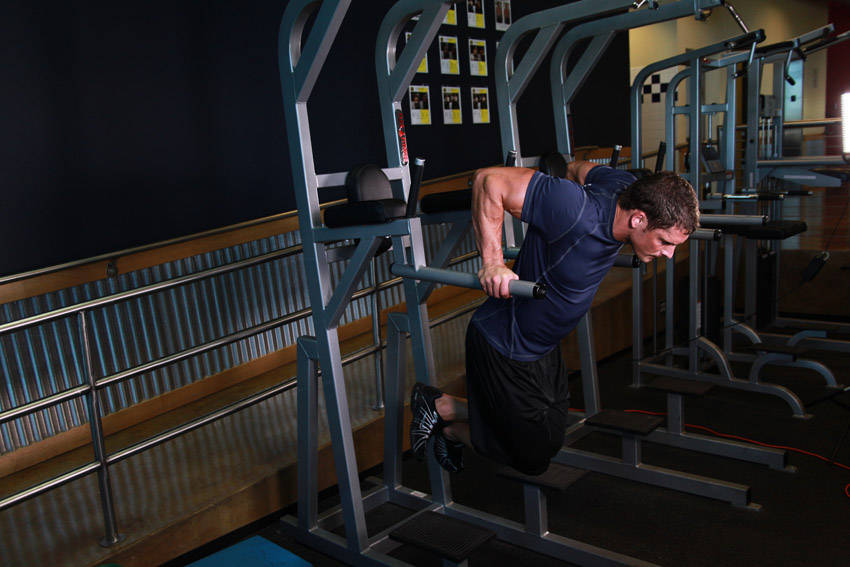
Illustration: Dips - Chest Version · closest available open illustration of the same or equivalent movement. Follow the written setup for this equipment variation.
Set up
- 1Choose a stable support surface and clear the space around you.
- 2Use assistance or elevation to match the prescribed rep range.
- 3Arrange the bench, cable, or handles so the upper arms remain stable and the elbows move comfortably.
- 4Use a grip that keeps the wrists stacked and start with the triceps under a controlled stretch.
How to perform it
- 1For this exercise you will need access to parallel bars. To get yourself into the starting position, hold your body at arms length (arms locked) above the bars.
- 2While breathing in, lower yourself slowly with your torso leaning forward around 30 degrees or so and your elbows flared out slightly until you feel a slight stretch in the chest.
- 3Once you feel the stretch, use your chest to bring your body back to the starting position as you breathe out. Tip: Remember to squeeze the chest at the top of the movement for a second.
- 4Repeat the movement for the prescribed amount of repetitions.
Breathing
Inhale and brace before the lowering phase, then exhale gradually through the hardest part of the repetition without losing trunk position.
Technique cues
- •Chest tall; shoulders down
- •Press through the whole hand
- •Control the final third of the lowering phase
Common mistakes
- •Shrugging toward the ears
- •Letting the shoulders roll forward at the bottom
- •Bouncing or cutting the range short
Machine busy?
See equivalent alternatives
These options train the same main muscle group and prioritize a similar movement pattern. Match the effort and rep target rather than trying to match the exact load.

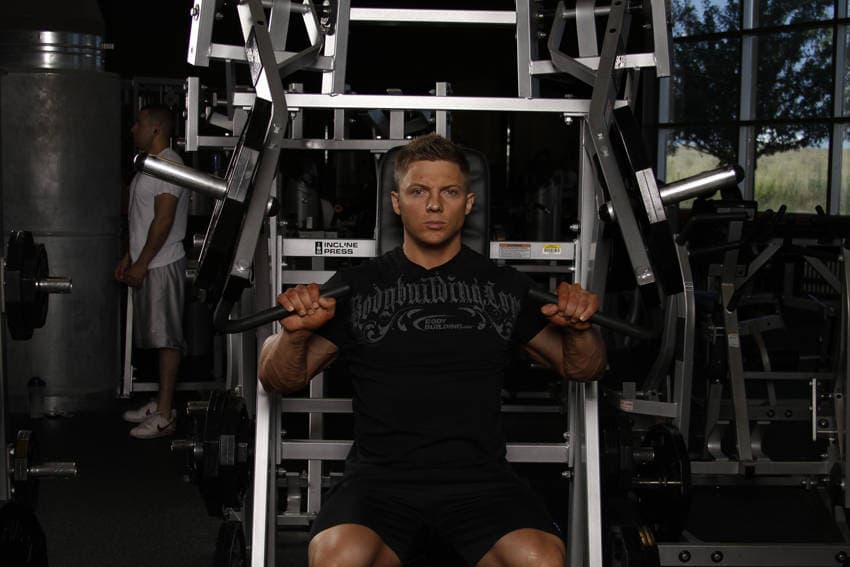
Plate-loaded

Smith machine
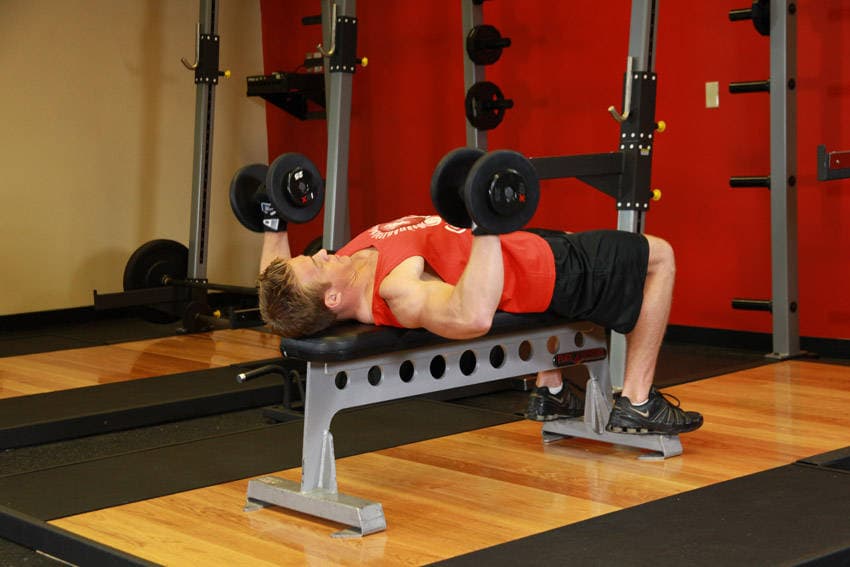
Barbell
Safety note: This training reference is educational, not medical advice. Use pain-free ranges and seek qualified care for persistent pain, dizziness, or other concerning symptoms.