Cable Wood Chop
Cable Wood Chop is a compound rotation exercise for the core. Use a controlled range that keeps the target muscles loaded and the joints comfortable.
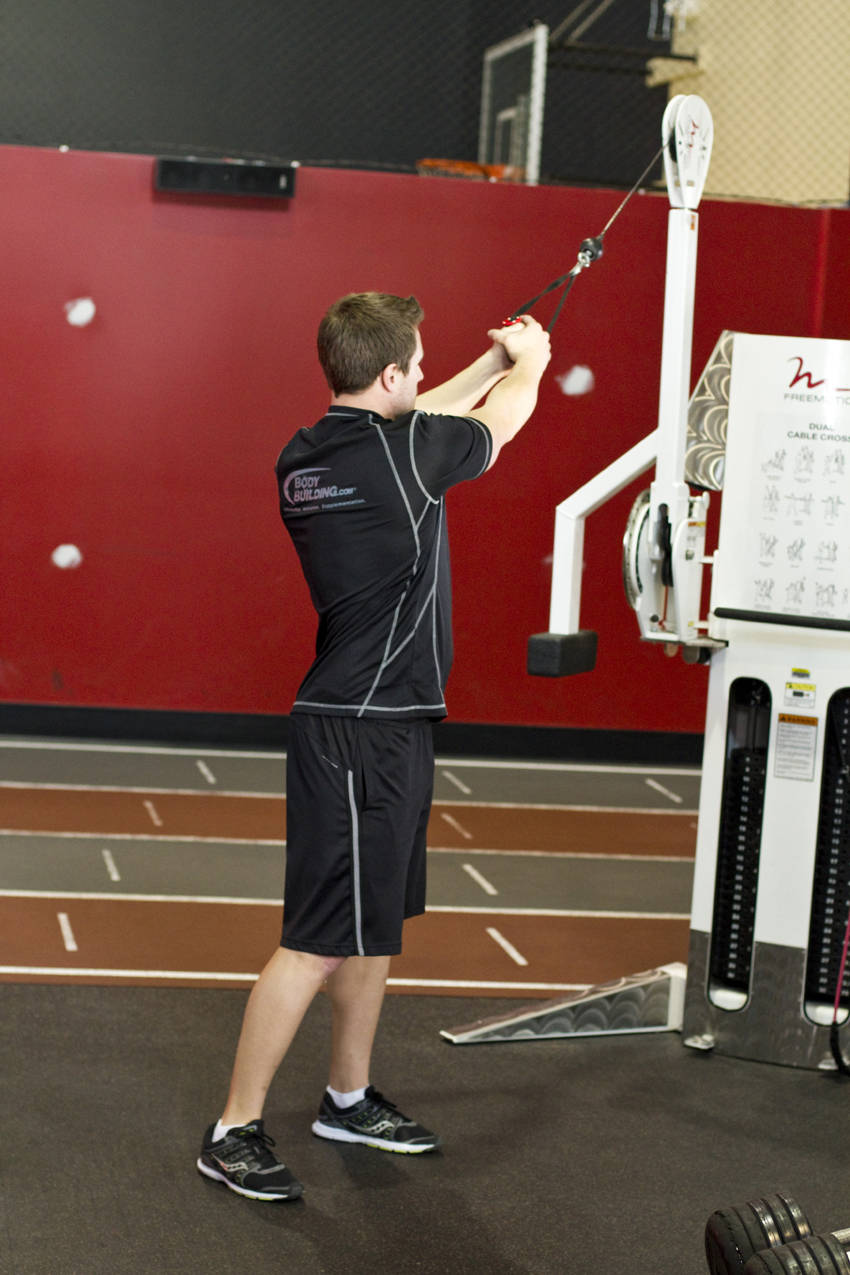
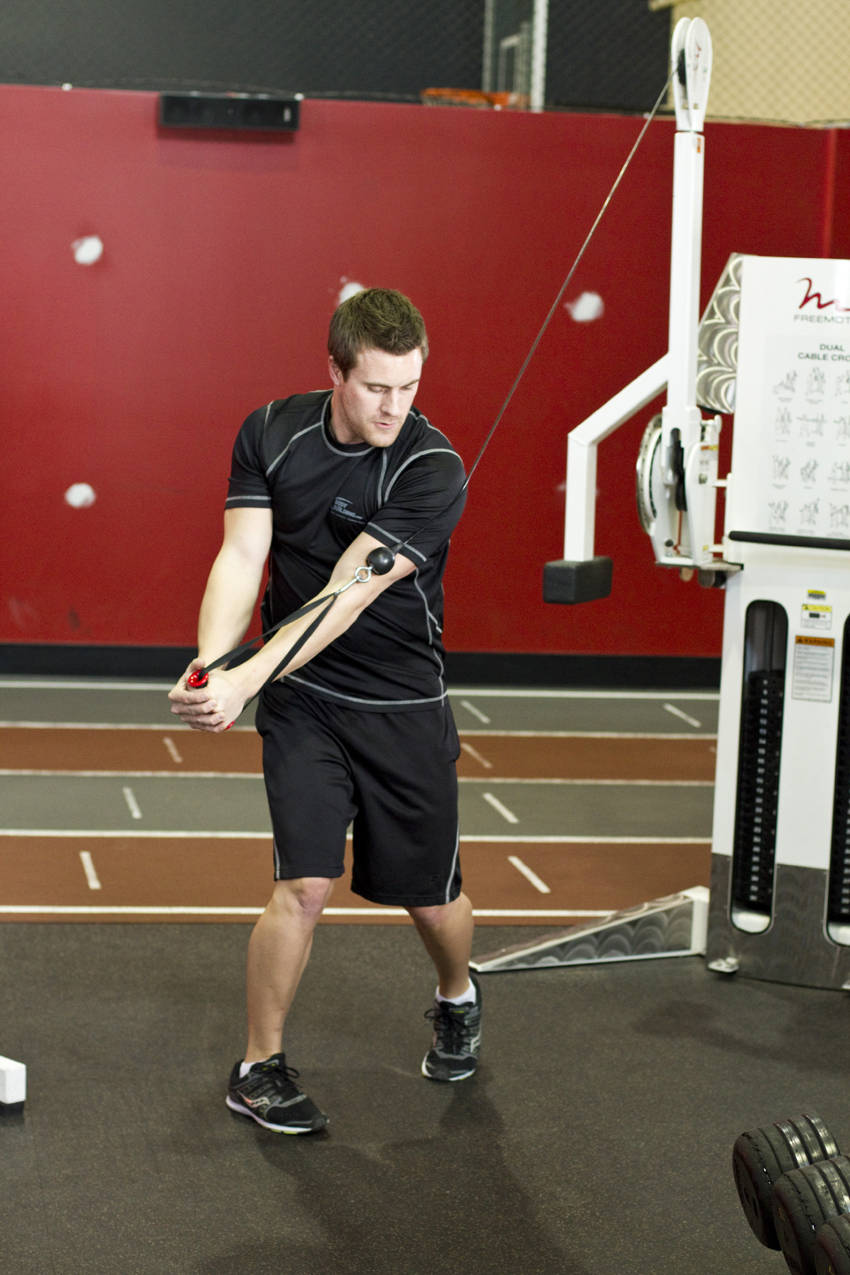
Illustration: Standing Cable Wood Chop · closest available open illustration of the same or equivalent movement. Follow the written setup for this equipment variation.
Set up
- 1Set the pulley height before selecting the load.
- 2Stand or sit far enough away to keep cable tension at both ends of the repetition.
- 3Set the resistance and body position so the ribs begin stacked over the pelvis.
- 4Brace before moving and choose a range that does not create pulling in the low back or neck.
How to perform it
- 1Connect a standard handle to a tower, and move the cable to the highest pulley position.
- 2With your side to the cable, grab the handle with one hand and step away from the tower. You should be approximately arm's length away from the pulley, with the tension of the weight on the cable. Your outstretched arm should be aligned with the cable.
- 3With your feet positioned shoulder width apart, reach upward with your other hand and grab the handle with both hands. Your arms should still be fully extended.
- 4In one motion, pull the handle down and across your body to your front knee while rotating your torso.
- 5Keep your back and arms straight and core tight while you pivot your back foot and bend your knees to get a full range of motion.
- 6Maintain your stance and straight arms. Return to the neutral position in a slow and controlled manner.
- 7Repeat to failure.
- 8Then, reposition and repeat the same series of movements on the opposite side.
Breathing
Inhale and brace before the lowering phase, then exhale gradually through the hardest part of the repetition without losing trunk position.
Technique cues
- •Keep the cable aligned with the moving limb from start to finish
- •Turn as one unit
- •Control the return
- •Keep knees tracking with feet
Common mistakes
- •Yanking with the arms
- •Twisting only through the lower back
- •Letting the cable snap back
Machine busy?
See equivalent alternatives
These options train the same main muscle group and prioritize a similar movement pattern. Match the effort and rep target rather than trying to match the exact load.
Safety note: This training reference is educational, not medical advice. Use pain-free ranges and seek qualified care for persistent pain, dizziness, or other concerning symptoms.