Cable Rear-Delt Fly
Cable Rear-Delt Fly is a isolation horizontal pull exercise for the shoulders. Use a controlled range that keeps the target muscles loaded and the joints comfortable.
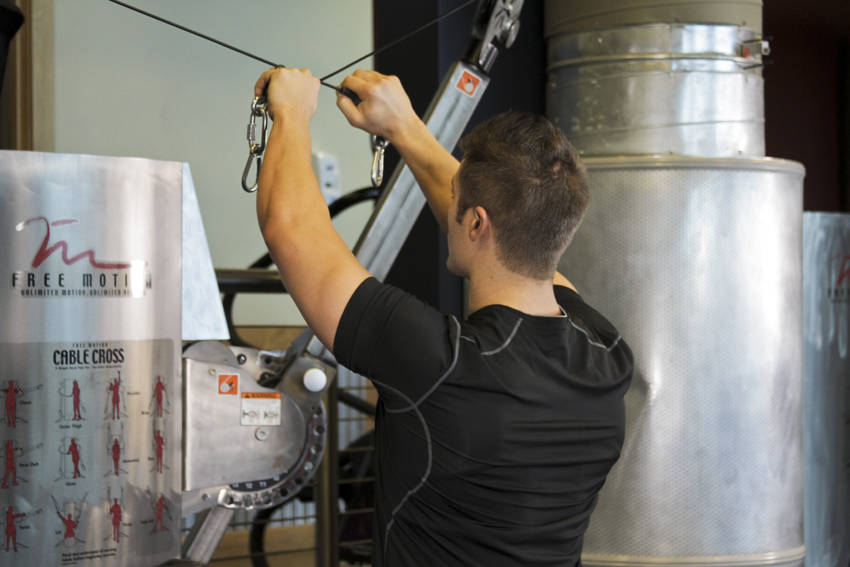
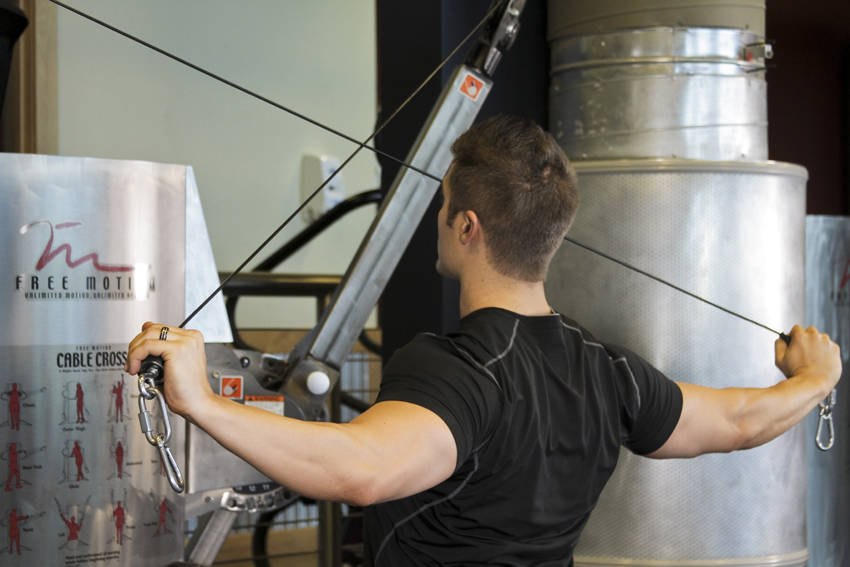
Illustration: Cable Rear Delt Fly · closest available open illustration of the same or equivalent movement. Follow the written setup for this equipment variation.
Set up
- 1Set the pulley height before selecting the load.
- 2Stand or sit far enough away to keep cable tension at both ends of the repetition.
- 3Set the handles or pulleys so the hands travel through chest height.
- 4Start with a soft elbow bend and only open as far as the front of the shoulder remains comfortable.
How to perform it
- 1Adjust the pulleys to the appropriate height and adjust the weight. The pulleys should be above your head.
- 2Grab the left pulley with your right hand and the right pulley with your left hand, crossing them in front of you. This will be your starting position.
- 3Initiate the movement by moving your arms back and outward, keeping your arms straight as you execute the movement.
- 4Pause at the end of the motion before returning the handles to the start position.
Breathing
Exhale through the effort or shortened position; inhale during the controlled return. Keep the trunk quietly braced.
Technique cues
- •Keep the cable aligned with the moving limb from start to finish
- •Elbows drive; hands are hooks
- •Keep the neck long
- •Finish without leaning backward
Common mistakes
- •Using torso momentum
- •Pulling the shoulders toward the ears
- •Over-squeezing far behind the body
Machine busy?
See equivalent alternatives
These options train the same main muscle group and prioritize a similar movement pattern. Match the effort and rep target rather than trying to match the exact load.
Machine
Cable
Safety note: This training reference is educational, not medical advice. Use pain-free ranges and seek qualified care for persistent pain, dizziness, or other concerning symptoms.