Cable Kickback
Cable Kickback is a isolation hip extension exercise for the hamstrings & glutes. Use a controlled range that keeps the target muscles loaded and the joints comfortable.
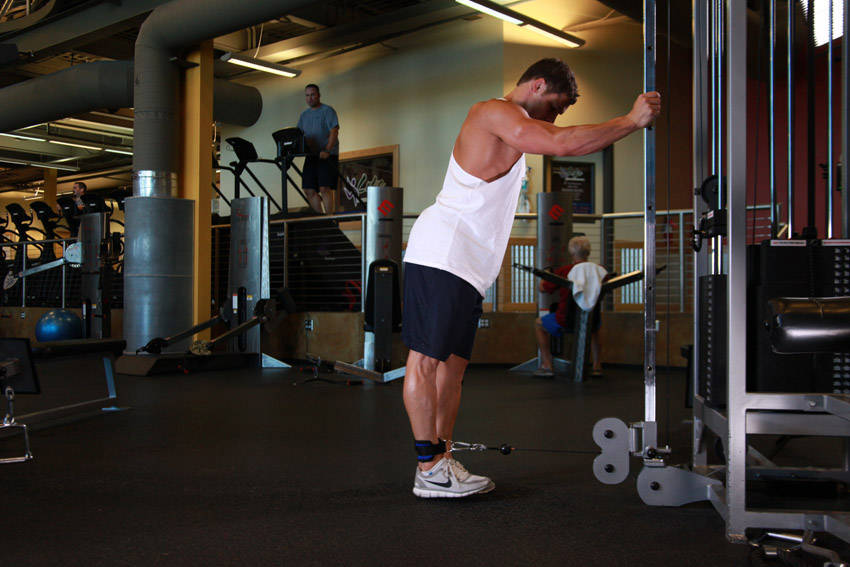
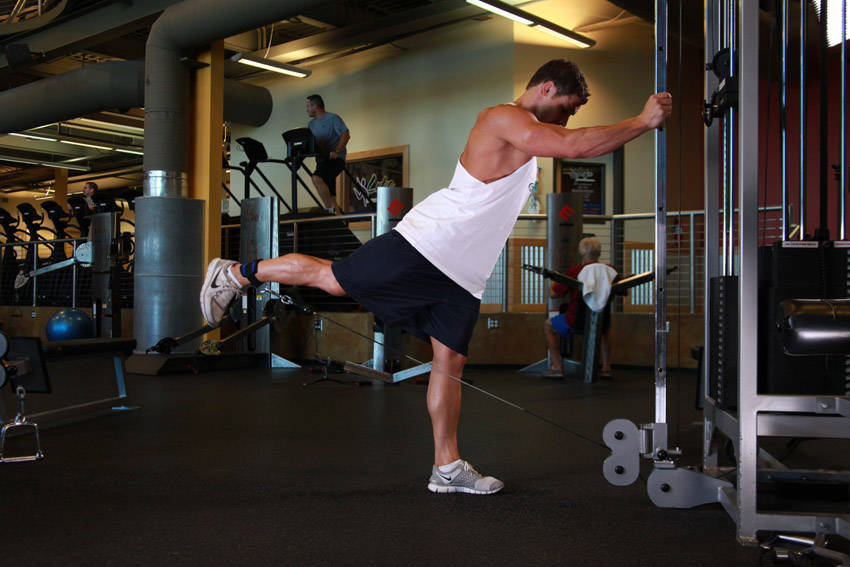
Illustration: One-Legged Cable Kickback · closest available open illustration of the same or equivalent movement. Follow the written setup for this equipment variation.
Set up
- 1Set the pulley height before selecting the load.
- 2Stand or sit far enough away to keep cable tension at both ends of the repetition.
- 3Set the pad, cuff, or stance so the hip moves freely without the torso having to lean.
- 4Hold a stable support and begin with the pelvis square rather than rotated open.
How to perform it
- 1Hook a leather ankle cuff to a low cable pulley and then attach the cuff to your ankle.
- 2Face the weight stack from a distance of about two feet, grasping the steel frame for support.
- 3While keeping your knees and hips bent slightly and your abs tight, contract your glutes to slowly "kick" the working leg back in a semicircular arc as high as it will comfortably go as you breathe out. Tip: At full extension, squeeze your glutes for a second in order to achieve a peak contraction.
- 4Now slowly bring your working leg forward, resisting the pull of the cable until you reach the starting position.
- 5Repeat for the recommended amount of repetitions.
- 6Switch legs and repeat the movement for the other side.
Breathing
Exhale through the effort or shortened position; inhale during the controlled return. Keep the trunk quietly braced.
Technique cues
- •Keep the cable aligned with the moving limb from start to finish
- •Belt buckle toward chin
- •Finish with glutes, not low back
- •Keep shins near vertical at the top
Common mistakes
- •Overarching the lower back
- •Feet too far or too close
- •Bouncing off the bottom
Machine busy?
See equivalent alternatives
These options train the same main muscle group and prioritize a similar movement pattern. Match the effort and rep target rather than trying to match the exact load.
Safety note: This training reference is educational, not medical advice. Use pain-free ranges and seek qualified care for persistent pain, dizziness, or other concerning symptoms.